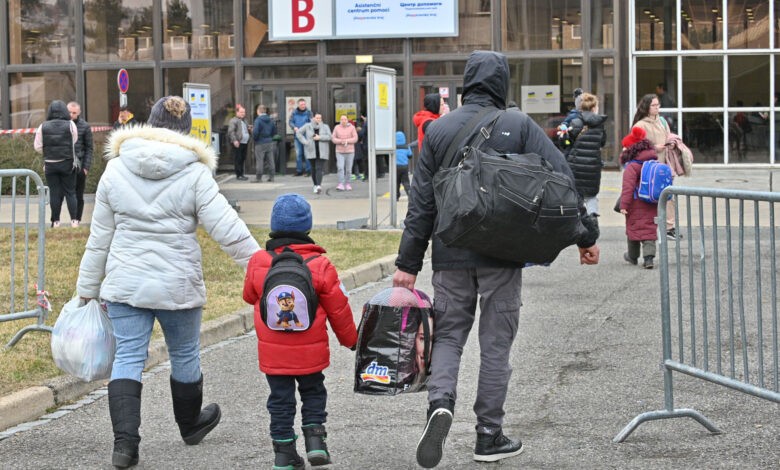
The war in Ukraine forced millions of our citizens to seek refuge in European countries. Currently, more than 10 million Ukrainians live in various EU countries. Against this background, European governments are actively working on updating refugee support mechanisms, adapting policies to new realities. The year 2025 will be an important stage in this process, because a number of countries are introducing changes in the rules for the stay of Ukrainians and the provision of assistance to them.
Great Britain: extension of visas
The British government will extend the validity of visas for Ukrainian refugees for another 18 months. Starting February 4, 2025, applicants will be able to apply up to 28 days before the current visa expires. During the processing of the application, which will last up to 8 weeks, the refugees will maintain their legal status, but will not be able to leave the country.
It is important to note that the time spent in refugee status does not count towards the 10-year period required to obtain permanent residence.
Germany: reduction of social benefits
Germany continues to help Ukrainians, but is revising the system of social assistance for refugees. From 2025, able-bodied persons who reject an employment offer will have their Bürgergeld payments reduced by 30% for a period of three months. This decision is aimed at stimulating employment and reducing the burden on the budget.
Single adults currently receive €563 a month, teenagers €471 and children €357. About 1.1 million Ukrainian refugees live in Germany, of which almost 700,000 are able-bodied. In the summer of 2024, the employment rate among them reached 38%.
Poland: introduction of the CUKR card
Starting in 2025, Poland will introduce a new CUKR residence card, which will allow Ukrainians to legally stay and work in the country for three years. Those who have Pesel UKR status as of March 4, 2024 and have kept it until the time of application will be able to receive the card.
Applications will be submitted through the online service, and CUKR holders will be able to leave Poland for no more than 6 months. Currently, Ukrainian refugees have the right to stay in Poland until September 30, 2025.
Czech Republic: a new type of residence permit
From 2025, the Czech Republic will introduce a long-term residence permit (dlouhodobý pobyt), which will allow Ukrainians to stay in the country for up to five years. This status also opens access to the labor market. It will be received by persons who have worked in the Czech Republic for the past two years and meet the financial conditions.
This permit requires biometric data and proof of financial capacity, especially for families with children. Applications are expected to be open from mid-2025.
Latvia: extension of aid
Latvia has extended the deadline for providing assistance to Ukrainian refugees for another year. The legislative changes provide for an increase in the one-time crisis allowance: adults will receive 377 euros, and children – 264 euros. Refugees will also be compensated for the costs of accommodation, food and medical drugs.
Ukrainians in Latvia will have a temporary residence permit for a period of three years, which is a year longer than before.
Lithuania: free transport
Lithuanian cities, in particular Vilnius, continue to grant Ukrainians the right to free travel in public transport. This benefit is effective from March 2022 and will be maintained in 2025.
Currently, about 89,000 Ukrainians live in Lithuania, of which 62% of those able to work are already working legally.
The changes, which will enter into force from 2025, demonstrate the desire of European countries to adapt their policies to support Ukrainian refugees. Updated conditions of stay, new residence permits, reduced benefits and continued assistance are designed to ensure a balance between supporting our citizens and integrating them into local societies. These measures are important both for the refugees themselves and for the countries that provide them with shelter.