IA “FACT” already reported on income from exports to the state budget. Currently, it seems appropriate to consider the impact of external and internal factors of the war period on the domestic export sector, production and logistics costs. After all, a trend of forced adaptation of business to new market conditions has formed in Ukraine. They mean both positive aspects – growth in demand for certain goods, and negative – growth in logistics and insurance costs, as well as market instability and war-related costs.
The largest items of export are traditionally agricultural and oil products
Demand for Ukrainian products, in particular sunflower oil, remains high, supported by market conditions and climatic conditions affecting crops in other countries. In 2022-2023, the export of grain and vegetable oils reached almost 68 million tons, which is 10% more than the previous year. Exports of sunflower oil in the 2023-2024 marketing year increased by 18%, reaching volumes exceeding pre-war indicators (for reference: the marketing year allows for a more accurate assessment of yield statistics, stocks and market trends. For grain crops (wheat, corn), the marketing year usually begins in July and ends the following June, since the crop is harvested in July-August, for for soybeans and oil crops, the marketing year may begin in September). Favorable prices (780-795 USD/t SRT port) increased revenue to $5 billion in 2023.
Ukraine remains one of the leading exporters of sunflower oil, corn, wheat, soybeans and rapeseed. However, today, the success of Ukrainian exporters depends on the stability of logistics routes, which are subject to obstacles due to the war. Product demand is sustained due to declining yields in other countries, but external factors – weather conditions, export restrictions and global economic fluctuations – create additional volatility and risks.
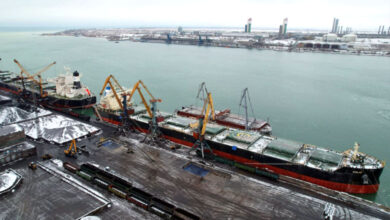
The blockade of Black Sea ports forces Ukrainian manufacturers to look for alternatives routes for export. For example, sunflower oil and other agricultural products began to be sent by rail or truck across the western borders to Poland, Romania and other European countries. However, land logistics are significantly more expensive and less convenient for large volumes of exports than sea routes.
Exports of corn and wheat also face similar challenges. Loss of access to ports forces farmers to use overland routes through Poland and the Danube ports in Romania. This not only increases transport costs, but also leads to congestion at borders, which delays the shipment of goods and complicates planning. In addition, due to military risks, the cost of cargo insurance increases. Only specialized companies are ready to insure cargo from Ukraine, and this increases costs for Ukrainian exporters.
Similar logistical difficulties arise for the export of soybeans and canola, where weather conditions in competing countries also affect market demand. For example, the soybean crop failure in Brazil due to drought has increased interest in Ukrainian soybeans, but the instability of logistics routes prevents Ukrainian exporters from delivering products on time. The use of alternative routes through Western Europe for the export of rape significantly increases costs, which reduces the profitability of Ukrainian exports on the world market.
The situation in the Black Sea remains extremely tense: due to constant shelling of the ports of Odesa and other cities after the termination of the grain agreement, shipping in the region is risky, which significantly limits the volume of exports of grain and oil crops from Ukraine. This affects not only Ukrainian farmers, but also countries that traditionally depend on Ukrainian products – Turkey and Egypt, which are now forced to look for new suppliers. Such changes strengthen competition and reduce the share of Ukrainian exports on international markets.
Thus, Ukrainian farmers have to adapt to changing conditions, look for new markets and rebuild logistics in order to stay afloat.
Income to the state budget from metal exports
The Russian invasion hit hard at the Ukrainian steel industry, which traditionally provided substantial revenues to the state budget. The shutdown of metallurgical enterprises in the east of Ukraine, in particular “Azovstal” and “MMK named after Ilyich”, the destruction of critical infrastructure provoked a reduction in steel production and exports. Despite this, in the first half of 2022, thanks to high global prices for the metal, revenues from steel exports were relatively stable. However, after June 2022, the situation worsened as global metal prices declined, affecting industry revenues.
In 2023, the industry was gradually recovering, but infrastructure problems and hostilities continued to limit production. Exports remained an important source of income, although it was not possible to reach the pre-crisis level of income.
A further recovery is now expected, especially thanks to the modernization and resumption of factories. Moderate growth in exports is forecast, but its success will depend on the situation at the front and global economic conditions.
According to the State Customs Service of Ukraine, in 2022 the export of ferrous metals amounted to 6.1 million tons, which is significantly less compared to previous years. Currency receipts from metal exports in 2022 decreased by 41.6% and amounted to 2.64 billion US dollars, while in 2021 this figure was 13.9 billion US dollars.
Last year it was from Ukraine exported 4.76 million tons of ferrous metals, which is 22% less than in the first year of the war. Revenues from the export of metal products in 2023 decreased by 41.6% to 2.64 billion US dollars.
At the same time, Russian attacks on the port infrastructure of the Odesa region led to an increase in insurance payments for ships bound for Ukrainian ports. The cost of ship insurance has increased from 0.75% to 1% of the value of the cargo, which increases the costs of sea transportation. Attacks on ports complicate the work of large international container companies in Ukraine, which additionally increases the costs of imports and exports.
The economy of Ukraine is significantly affected by recent events in the world steel market and in the field of sea transportation. China, as the largest consumer of steel, actively supports its developers, which contributes to the growth of metal prices. However, due to the real estate crisis, domestic demand for steel in the Celestial Empire remains weak, and Chinese producers are forced to increase exports, which affects global prices.
The increase in steel prices and the increase in insurance payments are becoming an additional burden for Ukrainian producers and exporters. These factors can lead to an increase in costs, which will eventually be reflected on end consumers.
Macroeconomic challenges of domestic manufacturers
Currently, domestic manufacturers face a number of macroeconomic challenges that reduce business efficiency and export competitiveness. Inflation, the devaluation of the hryvnia, the high cost of energy, the shortage of personnel, and the loss of traditional sales markets put the greatest pressure on domestic business.
It is obvious that military operations and economic upheavals have pushed inflation, which significantly increases the cost of production. For example, a Ukrainian company that produces agricultural machinery is forced to buy metal and parts from abroad due to a lack of domestic resources. As a result, due to the devaluation of the hryvnia, the cost of imported materials is constantly increasing, which leads to an increase in the total cost of production. The company tries to maintain a competitive price, but is forced to partially transfer the increase in costs to the final consumer, which reduces its competitiveness.
High energy prices are also putting pressure on industry. The increase in the price of blue fuel forces chemical and agro-industrial enterprises to reduce production or look for alternative sources of energy. Some companies have to increase production costs, which forces them to raise the prices of final products, reducing their competitiveness both in domestic and foreign markets. Chemical enterprises, in particular, manufacturers of fertilizers, are among the most energy-intensive, and therefore feel special pressure. Due to the increase in gas prices, many of them are forced to reduce production volumes or even stop work, which reduces the availability of fertilizers and ultimately affects the agricultural sector.
Personnel shortage became another barrier for manufacturers. Mobilization and mass emigration led to the outflow of highly qualified specialists. The shortage of personnel forces companies to invest in the search for new specialists or the training of less qualified employees.
Due to the military aggression of the Russian Federation, the traditional ones were lost markets sales in the CIS, which forced domestic manufacturers to look for new markets in Europe, Asia and the Middle East. It is obvious that entering new markets requires significant investments in marketing and adaptation of products to the standards and requirements of new countries. For example, confectionery companies that previously exported their products to Russia are now forced to adapt them for European consumers by changing packaging, improving recipes and establishing new marketing channels to gain the trust of new consumers.
In general, these challenges lead to an increase in production and transportation costs of Ukrainian products, which makes it difficult to compete with foreign companies that operate in more stable conditions. This negatively affects the share of Ukrainian manufacturers in international markets, reducing their ability to compete and develop in the global environment.
Strengthened role of the Eurozone as an export partner of Ukraine
Reduction of the domestic market increases significance exports for the Ukrainian economy, where the European Union is a key trading partner. International support helps reduce export risks and optimize logistics, but Ukraine is becoming increasingly dependent on the export of raw materials and low-tech products. This can increase the trade deficit, weakening the country’s position in the world market.
Despite the difficult conditions of the war, Ukraine’s economy shows signs of recovery, which opens up opportunities for the development of its own production. However, the business needs significant investment for this. Due to limited resources and high dependence on foreign aid, the state has limited opportunities to support investments. Also, the reduction of bank lending increases the risk of technological backwardness and wear and tear of production assets.
Experty emphasize on several key threats to the economic security of Ukraine. In particular, this is the migration of the population, part of which does not plan to return because of the war; decrease in trust in the state and the growth of the shadow economy; reduction of budgetary resources to finance important expenses; decrease in competitiveness due to lack of investment; increasing import dependence; negative impact on the environment and threat to food security due to problems in the agricultural sector.
These challenges require a review of state strategies and determination of new priorities to ensure economic stability.
Tetyana Viktorova