From a special regime to a general protection system: the model of support for Ukrainian refugees is changing in Poland

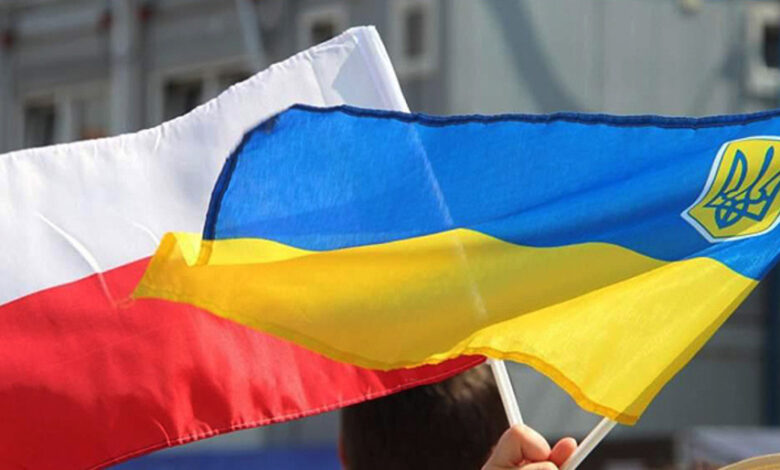
Poland is restructuring the system of support for Ukrainian refugees, transferring them from a special law to a general system of protection of foreigners, which changes the conditions of stay of millions of people on its territory and at the same time affects the practical implementation of social assistance, access to medicine and employment. The previous model, introduced in 2022, provided for a simplified and fast legalization mechanism, while the new law establishes clear deadlines and procedural requirements that should unify the rules for all categories of foreigners, reduce the budgetary burden, and increase the state’s control over resources.
Preliminary and adopted decision
As reports RMF24, on February 19, 2026, Polish President Karol Nawrocki signed a law that changes the system of support for Ukrainian refugees. It provides for the gradual winding down of a separate special regime introduced in 2022 and the transfer of its instruments to the general Law on the Protection of Foreigners. At the same time, the law extends the legality of stay of Ukrainian citizens who left due to the war until March 4, 2027, while maintaining basic legal certainty for those already on Polish territory.
The special law, adopted after the start of the full-scale Russian invasion, created a separate system that simplified the procedures for legalization, access to the labor market, education, social benefits and medical services. Its logic was to quickly respond to the unprecedented influx of people, which required operational decisions and minimizing bureaucratic barriers. The new law means the end of this exceptional regime and the integration of support into the universal mechanisms applicable to other foreigners in need of protection.
What’s changing
One of the key innovations is the obligation to apply for a PESEL number within 30 days of entering Poland. This identification number opens access to administrative and social services, and its late registration will lead to the termination of temporary protection, which will be considered a refusal of this form of support. Thus, the state is moving from the most simplified model to a system with clearly defined deadlines and procedural requirements.
Some benefits that were valid under the special law will be limited or revised. Social benefits, housing and separate medical care mechanisms will continue to be provided primarily for vulnerable categories, while the majority of able-bodied people will be oriented towards integration through employment. This approach reflects the government’s desire to reduce the budgetary burden and unify the rules of stay in accordance with common standards.
Financial and political motives
Signing the law, the Polish President emphasized the need to streamline the system and protect public finances, emphasizing that support for Ukraine continues, but the stage of unconditional privileges is over. Given the long-term burden on the State Budget associated with the accommodation and support of a large number of refugees, the government is trying to combine humanitarian obligations with financial stability.
The changes have already become the subject of political discussions within the country, as the practical implementation of the new norms depends on by-laws and administrative procedures that have yet to be defined. The transfer of support instruments to general legislation requires clear coordination between the government, parliament and local authorities, since it is at the local level that most social programs are implemented.
The transition to a common protection system is taking place against the backdrop of a pan-European discussion on the long-term integration of Ukrainians who left the country due to the war. Poland, which has hosted one of the largest numbers of Ukrainian citizens since 2022, is gradually transforming the emergency assistance model into a more stable and predictable legal structure.
The extension of legal stay until March 2027 creates a time horizon for adapting to the new rules, but the specific consequences for different categories of people – from families with children to people of retirement age – will depend on how the mechanisms for accessing benefits, healthcare and the labor market are implemented. As a result, Poland is moving from a regime of exceptional support to a system that combines the preservation of protection with increased requirements for independence and compliance with procedures.