On June 23, Ukraine celebrates Civil Service Day, while the world celebrates UN Civil Service Day, International Women in Engineering Day, and International Olympic Day. June 23 is also full of important historical events that left a deep mark in national, European and world history.
Day of public service in Ukraine
This holiday was introduced by presidential decree in 2003. The date was chosen as a sign of solidarity with international practice — on the same day, the United Nations Public Service Day, established by a resolution of the UN General Assembly in 2002, is held.
This is a professional holiday of persons who hold positions in executive bodies, exercise authority, and are responsible for the development and implementation of state policy. The civil service in Ukraine is regulated by a special law and has a clearly defined structure, a list of positions, selection criteria, and principles of activity. The key ones are transparency, controllability, political neutrality, integrity and accountability.
There are more than 160,000 people in the structure of state administration in Ukraine. This is the apparatus of ministries, services, agencies, inspections, administrations and territorial bodies of the central government. They are not political figures, but perform the functions of organization, monitoring, control, reporting, communication between the legislative and executive levels.
In 2016, the civil service reform was carried out: the job classification system was changed, competitive procedures were introduced, clear rules for career advancement, rotation, performance evaluation, mandatory electronic declaration. These innovations were designed to reduce the influence of politics, ensure stability and professionalization.
In the conditions of a full-scale war, a significant part of civil servants remains in their positions even in front-line zones, part of the system has been moved, part of the personnel has been mobilized. This creates additional challenges – personnel, legal, technical. The civil service continues to work under conditions of risks, lack of specialists, and limited resources.
Interesting facts
For the first time, the civil service was formally recognized as a separate system in the law of 1993 — earlier in the USSR, all employees had the status of “civil servants” without division into public or private sphere.
Ukraine is the only country in the post-Soviet space that, since 2016, has legally required all civil servants to undergo an annual performance evaluation with reference to further career advancement.
In 2022–2024, more than 15,000 civil servants were mobilized. Some of them continued to perform administrative functions remotely or combined service with keeping their positions.
During the evacuation from Kherson, Mariupol, Severodonetsk part of the state bodies was transferred to work in other regions. Parallel offices were created in the controlled territory, which was not foreseen by the previous legislation.
According to current regulations, a person who has the citizenship of another state or who has not passed a special check, including a declaration of family ties, cannot be a civil servant in Ukraine.
UN Public Service Day
This holiday was initiated by a resolution of the UN General Assembly in December 2002. The goal was to recognize the importance of public service for the development of societies, as well as to encourage young people to pursue a career in the public administration system.
The UN Public Service Awards — an international award for the best initiatives in the public sector — are also held on this day. This competition is designed to recognize innovations that improve efficiency, transparency and citizens’ access to public services. The participants are mainly countries of Asia, Africa, and Latin America. European and North American countries participate less often. Ukraine has not yet won at this level.
This day also serves as a platform for the exchange of experience between the public systems of different countries, the dissemination of best practices and the creation of the image of the public service as a professional and prestigious activity. It has not so much a ceremonial as an expert character — with round tables, reports, presentations of reforms, comparative analysis of state policies.
Interesting facts
UN civil servants do not represent their countries, they are obliged to act exclusively in the interests of the UN as an organization. It expressly forbids them from receiving instructions or influence from the government of their state.
UN staff are officially protected by immunity, and are not subject to the jurisdiction of the host country’s national courts — even in criminal cases — until the UN waives that immunity.
More than 37,000 people work in the UN structure, not including local staff of agencies and peacekeeping missions. It is the largest international civil service system in the world. Expected staff reductions due to large-scale optimization in 2025 amount to about 6,900 redundancies in the secretariat and almost 2,800 budget posts.
Competition for admission to the UN civil service is extremely high – on average, 100 to 500 people apply for one position. On average, only 1–2% of candidates are selected for professional positions.
There is a special category of employees – “staff on secondment”. These are employees temporarily delegated by the governments of their countries to work at the UN, but formally remain civil servants at home. They are allowed less than regular staff.
UN staff do not pay taxes in the countries where they work. The pay system is based on an interstate scale and includes basic pay, allowances for residence, dependents, hardship, etc.
There is a unique position – “ombudsperson”. This person within the UN itself deals with conflicts, complaints and discrimination between staff and administration. It is an internal mediation tool without the involvement of external courts.
Representatives of the countries of the Global South have historically dominated the highest leadership of the UN. This is not a coincidence – the Secretary General almost never represents any of the Western member states of the Security Council.
The number of women in leadership positions at the UN exceeded 50% for the first time only in 2021. Secretary General Guterres personally initiated the Gender Parity Strategy campaign, which envisages gender equality at all levels by 2028.
Every year on this day, the United Nations presents the United Nations Public Service Awards. This is one of the few international awards awarded exclusively for projects in the field of public administration, e-governance and transparency.
The award ceremony was held for the first time in 2003. Since then, awards have been presented in Barcelona, Seoul, Tanzania, Astana, The Hague, Manila and other cities, which emphasizes the global nature of the initiative.
Among the laureates are small countries such as Bhutan or Bahrain, which received recognition for effective reforms of digital public services and the implementation of a civil servant code of ethics.
Ukraine has never been included in the list of laureates. The country submitted projects several times, but they did not make it to the finals — in particular, due to a lack of English-language communication and poor documentation of the results.
International Women in Engineering Day
This is a professional and social holiday, which appeared in 2014 at the initiative of the Women’s Engineering Society of Great Britain. The event was launched as an attempt to draw attention to the unequal representation of women in technical fields. The idea was not only to honor women engineers, but also to popularize this profession among girls and break the stereotype of engineering as a “male field”.
In 2016, UNESCO joined the initiative, which actually gave the saint international status. Since then, the event has been celebrated at the level of governments, engineering schools, universities, corporations and international organizations in dozens of countries. The main goal is to highlight the contribution of women in design, construction, research, technological innovation, as well as to overcome gender barriers in technical specialties.
Interesting facts
In the UK in 2014, only 7% of engineers were women. At the time of the launch of International Women in Engineering Day, this number became the symbolic reason for the creation of the initiative.
UNESCO included the day in its annual calendar of gender-focused events just two years after its founding, one of the fastest examples of a non-governmental initiative gaining international recognition.
In 2017, the campaign has trended on Twitter in over 40 countries to date, including Germany, India, the US, Brazil and Indonesia.
Within INWED, a global map is produced, on which all the events dedicated to this day are marked every year – from lectures and exhibitions to engineering workshops in schools. In 2023, more than 350 events in 60 countries were registered.
In Iran, despite the restriction, a student exhibition of women developers of new materials in construction was organized within the framework of INWED in 2019. The event caused a stir, as it received permission only with the support of one of the French non-governmental organizations.
In South Africa in 2022, INWED presented a field monitoring drone system created by an all-female team of agricultural engineers under the age of 25.
In Japan in 2021, the most popular activity during this day was the “engineering TikTok marathon” – hundreds of female engineers talked about their work, demonstrating engineering processes in the form of short videos.
In the USA, the initiative has the active support of NASA, Boeing, Google, and Siemens, which every year publish the stories of their female engineering colleagues and launch internal mentoring programs for female engineering students.
International Olympic Day
This day was started in honor of the founding of the International Olympic Committee (IOC), which took place on this day in 1894 in Paris at the initiative of Pierre de Coubertin. The event became a turning point in the history of sports, because it marked the restoration of the tradition of the Olympic Games in its modern form.
The purpose of the International Olympic Day is to popularize sports, a healthy lifestyle and Olympic values. This is not a competition, but a global initiative that encourages people of all ages to participate in physical activity in any form – jogging, dancing, training, walking, flash mobs or online movements.
Since 1948, when this day was officially approved, the number of participants in events dedicated to Olympic Day has been constantly increasing. The modern concept is based on three principles: move, learn, discover. It includes not only a sports, but also an educational component – familiarization with the history of the Olympic Games, the role of sports in the development of peace, tolerance and inclusion.
Despite the global nature of the event, International Olympic Day is not a public holiday in any country, and its format depends entirely on local initiatives. This makes it possible to adapt the content to the specific needs of communities.
Interesting facts
The first attempt to celebrate Olympic Day took place in 1948 in only nine countries, including Canada, Greece and Great Britain. Ukraine joined much later — already after gaining independence.
In 1987, the “Olympic Day of Running” was added to the concept of the Olympic Day – mass races on short distances, which became the most massive form of participation in the world. In some countries, hundreds of thousands of people run every year.
In 2020 and 2021, due to the COVID-19 pandemic, the IOC held Olympic Day in a completely online format – with fitness sessions, performances by Olympians and live broadcasts of training from home. The total number of views of the initiatives exceeded 10 million.
In many countries, the events of this day are combined with national holidays or commemorative dates – for example, in Greece, events take place near ancient Olympia, and in Kenya – in a stadium named after a famous Olympian.
As part of the International Olympic Day in India in 2019, the first ever inclusive marathon was held with the participation of people with visual, hearing and musculoskeletal disorders.
Olympic Day is supported even in conditions of wars and crises. For example, in 2022, despite the war, more than 100 events were held in Ukraine, particularly in communities hosting internally displaced persons. The IOC provided methodological and financial support.
The symbol of this day is the Olympic relay of activity — participation in which does not require a sports uniform or registration. The main thing is to perform some physical action on June 23 and share it on social networks with the appropriate hashtag.
Historical events on this day
1888 — A monument to Bohdan Khmelnytsky was opened in Kyiv. This was the first monumental tribute to the hetman in the Ukrainian capital. The idea of establishing it belonged to Taras Shevchenko, but it was realized only at the end of the 19th century. The monument, created by the sculptor Mykhailo Mykeshin, is still one of the symbols of the city and a focus of national memory.
1917 — In Kyiv, at the II All-Ukrainian Military Congress, the First Universal of the Ukrainian Central Rada was solemnly proclaimed. The author of the document was Volodymyr Vynnychenko. Universal was the first official act declaring the autonomy of Ukraine within Russia. The Central Rada announced the need to create its own representative body — the All-Ukrainian Assembly — and manage finances independently. This decision was a response to the refusal of the Provisional Government of Russia to give Ukrainians even the prospect of autonomy. It was at this moment that Vinnichenko’s formula was born: “Russian democracy ends where the Ukrainian question begins.”
1940 — French General Charles de Gaulle, while in London after the fall of France under the onslaught of Nazi Germany, announced the creation of the French National Committee. This step became the first stage in the formation of the Free France movement, which did not recognize the collaborationist Vichy government and became the nucleus of the French resistance during the Second World War.
1961 — The Antarctic Treaty, which the countries signed back in 1959, entered into force. The document established the use of the continent exclusively for peaceful and scientific purposes. He banned all military activity, mining and territorial claims, opening the Antarctic to exploration and cooperation.
1987 — Ukrainian track and field athlete Serhii Bubka set a new world record in the pole vault — 6 meters 3 centimeters. This became the first in history to overcome the six-meter barrier in the open air. His records, which he broke more than 30 times, made Bubka one of the symbols of world athletics.
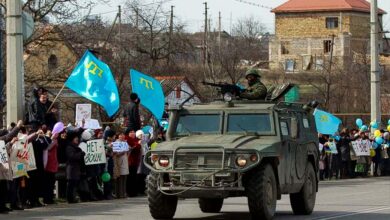
1990 — The mass return of Crimean Tatars to their historical homeland after decades of Stalinist deportation has begun. In 1944, they were forcibly removed from Crimea, and their return became possible only at the end of the Soviet era. This process was accompanied by numerous difficulties: from bureaucratic obstacles to a lack of housing, but it acquired great moral and political significance.
2001 — Pope John Paul II arrived in Ukraine for a three-day official visit. It was the first visit of the head of the Catholic Church to independent Ukraine. The Pope visited Kyiv and Lviv, held services for believers of the Latin and Greek Catholic rites, expressed support for the Ukrainian people and called for inter-confessional peace.
2016 — In Great Britain and Gibraltar, a consultative referendum on the country’s membership in the European Union was held. Citizens of Great Britain, Ireland and the Commonwealth of Nations participated in the vote. 51.89% voted for leaving the EU, 48.11% against. The very next day, Prime Minister David Cameron, who was an opponent of withdrawal, announced his intention to resign. This result launched the Brexit process, one of the biggest political upheavals in modern European history.
2022 — The European Council made a historic decision: granted Ukraine and Moldova the status of candidate countries for joining the European Union. This was a reaction to the full-scale invasion of Russia and the desire of Ukraine to finally gain a foothold in the European space. Georgia was not granted candidate status — the European Union expressed expectations for additional reforms.
Approval of the First Universal of the Ukrainian Central Rada
On June 23, 1917, at the II All-Ukrainian Military Congress, the First Universal of the Ukrainian Central Rada was read and later approved. The author of the document was Volodymyr Vynnychenko. It was with the promulgation of this act that the political formalization of Ukraine’s autonomy within the Russian Republic began.
The First Universal declared: Ukraine is not separated from Russia, but the Ukrainian people have the right to organize their lives independently. The document discussed the need to create the All-People’s Ukrainian Assembly (Sejm) — a representative body of power that was to be elected on the basis of universal, equal, direct and secret voting. Part of the taxes collected on Ukrainian territory had to remain in Ukraine from now on.
Before these events, the Provisional Government of Oleksandr Kerensky resolutely refused to even discuss the possibility of granting autonomy to Ukraine. It was then that Vynnychenko formulated the famous phrase: “Russian democracy ends where the Ukrainian question begins.”
In response to indifference and pressure from the Russian authorities, the Central Rada decided to act on the basis of the principle of “neither rebellion nor submission”, that is, not to wage an armed conflict, but also not to submit to ignoring Ukrainian demands. This is how the political dream of an autonomous Ukraine was proclaimed, which would later turn into a struggle for full independence.
Conducting a consultative referendum on Great Britain’s membership in the European Union
On June 23, 2016, a consultative referendum on Great Britain’s membership in the European Union was held in Great Britain and Gibraltar. Citizens of Great Britain, Ireland and the Commonwealth of Nations participated in the vote. The results were as follows: 51.89% voted for leaving the European Union, 48.11% voted against it.
After the results were announced, despite the referendum being consultative rather than constitutional, then Prime Minister David Cameron (who had initially opposed the country’s exit from the EU) announced his resignation. As a result, the country did leave the European Union.