Now in Ukraine, the idea of switching to a 12-year education system in schools is being discussed more and more often. Under the slogan of “improving the quality of education”, education officials are proposing to add another year, but will this really solve the problem? Will it not turn into another pseudo-reform that will add trouble to students and teachers without bringing real results? The number of years in school is not a magic wand that automatically improves knowledge and skills. What is more important: an additional year at the desks or the content and quality of education, which are becoming more and more secondary every year?
Decisive steps to change
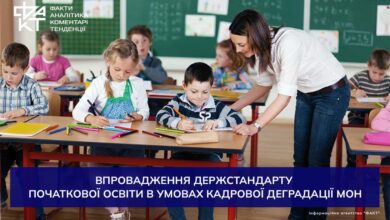
According to the Law of Ukraine “On Education” and the statements of the Ministry of Education and Science (MES), the transition to a 12-year school education system should take place in 2027. Profile secondary education will also start, which means that after the 9th grade, students will be able to enter an academic lyceum, choosing a profile and subjects, and will prepare in-depth for acquiring a profession.
According to the reform plans, it is assumed that school education should consist of:
- elementary school (grades 1-4);
- basic (grades 5-9). From now on, schools become gymnasiums;
- senior specialized school (10-12 grades). Academic and specialized lyceums appear.
Education in academic lyceums will last three years and will represent preparation for admission to a higher educational institution, while professional lyceums will provide immediate and full general secondary education and the opportunity to acquire a profession. Such differentiation will make it possible to satisfy the country’s need for in-demand professions, and not to observe the picture of mass enrollment in higher education institutions and replenishment of the labor market with professions that are not in demand in the current conditions.
Of course, it takes time and balanced actions to improve.
“For all 30 years, there have been three key weaknesses in Ukrainian education – these are not modernized educational space, the content of education and low wages. All this is happening because of one reason – it is insufficient political will to take the lead in this process. The main reason, of course, is financial. After all, it requires enormous funds, billions of dollars in order for us to make the educational system one of the best in the world in 7-10 years. Now there is such political will, we know what to work on, what to improve and where to get funds. And if we correct these three disadvantages and get a great educational environment, then we will return the million children who left, and then they will want to come to us from abroad, and we will not look for where to send the child to study.”, – said the chairman of the Verkhovna Rada of Ukraine Committee on Education, Science and Innovation Serhiy Babak at the “Teachers of the Future” festival.
Therefore, in the 2025-2026 academic year, the state plans to launch an educational pilot project of a high school. According to it, it is stipulated that one academic and two professional lyceums should be established in each oblast.
When asked why high school students in Ukraine were given another year of study, the Minister of Education and Science of Ukraine, Oksen Lisovyi, answered that the following steps will provide students with the opportunity to prepare for university:
“We are currently working with our team of the directorate of higher education, and in some directions we foresee a reduction of the bachelor’s degree. We will announce separately when we come to this decision, but you leave university more prepared. And likewise, if you have chosen a professional college, you enter the labor market already with a profession. Therefore, plus one year and, accordingly, the choice of profiles for which you work.”
According to MES specialists, thanks to the reform, the situation should fundamentally change. Profile lyceums will offer entrants 3 profiles: linguistic and literary, social and humanitarian, and STEM. The radical approach to education will change in favor of concentration on in-depth study of subjects necessary for the future profession. Reducing the number of subjects will relieve students and give them the opportunity to improve their level of knowledge in the main subjects. Parental costs for tutoring and additional paid educational services will be reduced. This reform is fully oriented towards compliance with European standards and meets the demands of the labor market. In addition, the system will be flexible, and if desired, the student can always change the lyceum and continue studying in an academic direction, or, conversely, in a professional direction. Also, the funds that were previously directed to the maintenance of a larger number of inefficient institutions will be directed to the real needs of new-type schools.
However, data a survey of the Kyiv International Institute of Sociology indicates that only 11% of parents support the 12-year education system. While 25% of respondents are categorically against the reform, and 35% disagree with the innovation. In turn, 25% of the surveyed schoolchildren have a positive attitude to increasing their studies by one more year. And only 18% of respondents are against it.
58% of teachers and heads of education management bodies believe that the changes will bring positive improvements in the educational process with the implementation of the 12-year education system.
It is worth noting that 85% of parents of students in grades 10-11 expressed their support for specialized education. The situation is similar with the students of grades 10-11 (85% – for specialized training). To dispel all doubts and understand the pitfalls, let’s find out exactly what the education reform will bring.
Advantages and disadvantages of the 12-year education system
The main argument of supporters of 12-year education is the harmonization of the educational process with European standards. In many EU countries, students study for 12 or even 13 years. By data official UNESCO studies, an additional year of education in secondary school increases the income of an adult in a country by 8%. Macroeconomic labor productivity in a country with a 12-year education system increases by 6.2%.
According to experts, a longer period of study allows students to learn the material more gradually, in depth and clearly. In the conditions of the growing volume of information and requirements for knowledge, it would seem that an additional year provides an opportunity to better prepare schoolchildren for future professional challenges. In addition, an additional year can give children more time to develop so-called “soft skills” – communication skills, critical thinking, creativity, which are becoming increasingly important in the modern labor market. It is also a time for students to decide on their future profession, undergo career guidance or receive additional training before entering the university.
However, not everyone sees 12 years of education as a positive, looking at the other side of the coin. Opponents of the reform point to the problems that arise in the current school system and ask the question: Shouldn’t the existing deficiencies be eliminated first, and only then add another year? For example, the low level of student motivation, overloaded programs, poor-quality textbooks, deficiencies in teacher training — these are all issues that have long needed to be resolved.
Critics also point out that for many families, an extra year of school means a greater financial burden. After all, children will remain “dependent” for a year longer, and parents will be forced to allocate additional funds for educational materials, tutors and school expenses.
A separate problem is the psychological burden on students. Already, schoolchildren face high levels of stress due to intensive curricula and constant demands. Will the children be able to maintain their motivation and emotional balance if their studies are extended for another year? Adolescence is a period when most students already want to start their career or study something they are really interested in instead of staying in school.
The experience of foreign countries regarding the implementation of the 12-year education system
The introduction of a 12-year education system is being actively discussed not only in Ukraine, but also in many countries that have already gone this way. Let’s look at the experience of other countries: how did they implement longer school programs, what did it give students and is this experience useful for Ukraine?
Most European countries, in particular Germany, France, Sweden, use a 12- or 13-year education system. The main goal of this approach is not only to give schoolchildren more knowledge, but also to help them better adapt to the challenges of the modern world. For example, in Germany, students spend more time on practical classes, mastering future professions, or on the development of “soft skills”, which are becoming increasingly important in the labor market.
In Sweden, great emphasis is placed on an individual approach to learning and psychological support for students. A longer study period provides more opportunities for a flexible schedule, less stress and time for self-development.
In the US, the duration of education is also 12 years, but much attention is paid to the choice of subjects in high school. Students can choose courses according to their interests and future plans. This allows them to focus on the areas they consider important for their future careers and better prepare them for entering universities or the job market.
However, the US system also has its challenges, including unequal access to quality education in different regions and schools. Here, as in Ukraine, there is a question of adapting educational programs to the modern needs of students.
South Korea is a country with one of the most intensive education systems in the world. Although the school lasts 12 years, Korean students spend most of their lives studying textbooks, often studying late into the evening and on weekends. This system produces high academic results, but it is also criticized because of the strong psychological burden on students. Many children suffer from stress and fatigue, which calls into question the feasibility of such a rigid system.
A look into the past
Let’s take a trip to the past and remember how the education system was organized earlier. Many Ukrainians ardently defend the times of their studies, recalling that back then “they knew better and nothing stood in the way.” But is it really so?
The school 10-year education system of the Soviet Union has long been considered one of the best in the world, and in some countries, for example, in China, it is still considered. Thanks to the powerful and high-quality school education, the country was a leader in space research, nuclear physics and other high-tech industries. It was distinguished by its unique structure, which combined deep theoretical knowledge with practical skills. Even after the collapse of the USSR, many countries of the post-Soviet space preserved the basic principles of this system, continuing to educate highly qualified specialists and people with high moral qualities. What is the secret of this system and why was it so highly valued?
The Soviet system of education was based on deep and systematic study of all major subjects. It provided a wide coverage of knowledge, starting from primary school and ending with higher education. For example, mathematics, physics and chemistry were taught at such a high level that Soviet students constantly won prizes at international Olympiads. This was the result of the fact that schools taught not just formulas, but understanding the essence of processes and phenomena.
Unlike Western models, the Soviet system was focused on training a well-rounded personality. Curricula included a wide range of subjects — from literature and art to the exact sciences and physical culture. This helped to raise harmoniously developed people who had a broad outlook and could adapt to different professional areas.
In the Soviet system, there was a close interaction between school and higher education. For example, in technical disciplines, school graduates already had basic knowledge that allowed them to easily continue their studies at technical universities. Thanks to this, the Soviet Union produced a huge number of engineers, scientists and technical specialists, who became the basis of many branches of industry and science.
One of the main advantages of the Soviet education system was a highly qualified and motivated teaching staff. Teachers did not just teach the material, but also educated their students, instilling in them moral and ethical values. This created an atmosphere of respect for learning and a high level of trust in teachers. In post-Soviet times, many of these teachers continued to work, preserving the traditions of quality education.
One of the main principles of the Soviet education system was that it was free and accessible to all citizens. Regardless of social status or place of residence, everyone had the opportunity to receive a quality education, which greatly expanded the opportunities for talented children from remote areas or disadvantaged families. Pupils from rural areas received no worse education than urban residents, many of them successfully passed entrance exams to higher educational institutions or technical schools.
Much attention was paid to the practical training of students. Starting from middle school, children were involved in work in labor camps, they took part in industrial practices, where they got to know working professions and skills. It not only prepared for adult life, but also formed respect for work. In addition, considerable attention was paid to educating students in the spirit of respect for elders, helping the elderly (many people remember the Timurians), high moral principles were instilled in children.
That is, 10 years was quite enough to teach and raise an intelligent, morally healthy generation of children. At the same time, the Soviet school had its shortcomings. It is worth acknowledging the fact that in Soviet times, education was centralized and ideological, which meant that the school curriculum was one-size-fits-all, with minimal emphasis on the individual needs or interests of students. Students were often required to learn defined concepts without the right to critical analysis. Teaching was mostly authoritarian, with the focus on memorizing information rather than understanding or applying it in practice.
The introduction of 11-year education in Ukraine and other post-Soviet countries over time was aimed at improving the quality of school education, overcoming some of the shortcomings of the Soviet system and approaching international educational standards. However, while this move brought some improvements, there remained issues that could not be fully resolved.
Although the additional year of study was intended to provide an opportunity to study more material, the problem of student overload remains relevant today. Often, the programs are still too saturated, and students are forced to memorize a large number of facts without deep understanding. And this leads to stress and emotional exhaustion of schoolchildren, especially at the stage of preparation for external examinations.
Despite the fact that the 11-year system theoretically allows more time for the development of individual abilities of students, in reality this process is still not sufficiently implemented. Most schools continue to follow a standardized curriculum that does not always take into account the individual needs and interests of each student. For example, specialized training is not always organized at the proper level, which leads to insufficient training for specific professions or fields. The school curriculum still focuses on theoretical knowledge and not enough attention is paid to developing practical skills that can be useful in life. This creates a gap between what students learn in school and what they actually need in real life or the job market.
Currently, the question of whether the Ukrainian system is ready for 12-year education remains open. International experience shows that a longer period of study alone does not guarantee success if programs remain overburdened and students are not given sufficient support to develop their individual abilities. There is a great risk not to encourage, but, on the contrary, to cause an aversion to learning in general.
Extending schooling to 12 or even 13 years is a worldwide trend that, it would seem, should contribute to better preparation of children for adulthood. However, in reality, this extra time often does not bring the expected results. Additional years do not always mean an improvement in the quality of education. Many countries are already facing the problem that students are spending more time in school, but their knowledge and skills are not improving.
School education should not only teach, but also educate. Children must be able to distinguish between good and evil, understand the importance of respect for others, compassion and responsibility. However, more and more education officials are forgetting this key component. By focusing on dry academic knowledge and testing, we lose sight of the formation of the child’s personality. As a result, children often leave school with low levels of emotional intelligence and weak social skills.
Today we often hear that education is the sole task of parents. However, the school also has an important role in this process. It is at school that children spend most of their time, communicate with peers and form their first social skills. Therefore, teachers should be not only a source of knowledge, but also role models, mentors who help students find their place in the world. In addition, in today’s school, children are often under a lot of pressure, from endless homework to expectations about how to do well in exams. As a result, we face emotional burnout, anxiety and even depression among students.
Instead of increasing the number of lessons or lengthening the school years, it is worth reviewing the very approach to education. Increasing the number of years of schooling is not always a solution to the problem of the quality of education. Instead, it is worth focusing on improving the educational process, implementing effective methods of upbringing and caring for the emotional and psychological health of children. After all, it is important not only how much time a child spends at school, but what knowledge and values he will acquire during this period.