Night search without compelling reasons: the position of the ECHR and the Supreme Court on the legality of the actions of law enforcement officers

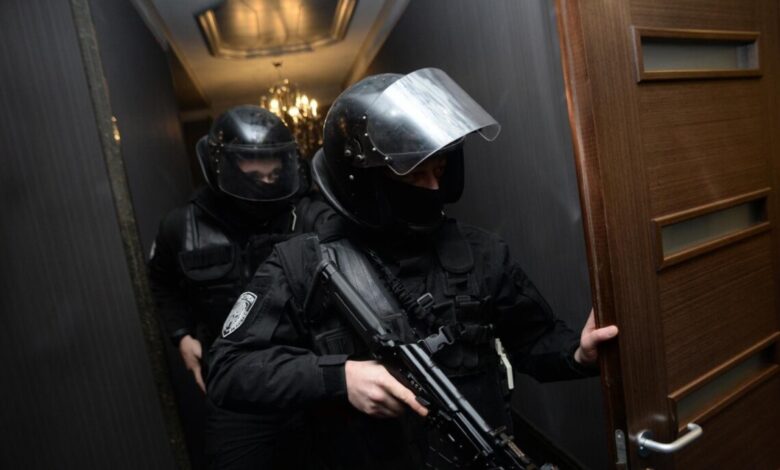
In Ukraine, night searches by law enforcement officers have become a common practice in criminal proceedings, although the law considers such time to be exceptional for investigative actions. After 10:00 p.m., interference with a person’s home or other possessions becomes much more serious, as the search violates private space during a period intended for rest, family life, and normal life. Because of this, courts require law enforcement officers to provide a specific explanation of why the search should have taken place immediately, without waiting for morning or prior permission from the investigating judge. The European Court of Human Rights, as well as the Supreme Court, have clarified the standards of legality of interference with privacy during night searches.
The position of the ECtHR
The ECtHR considers a search by law enforcement officers to be an interference with the right to respect for private and family life, guaranteed by Article 8 of the Convention. To verify such interference, the Court applies three criteria: the presence of a legal basis, a legitimate aim, and necessity in a democratic society.
The fact of compliance with national law is relevant, but it does not close the issue of proportionality. The State must show that the search was justified in the specific circumstances and that the person had sufficient guarantees against abuse.
In the case of Modestou v. Greece, the ECtHR stressed the need for appropriate and sufficient guarantees against arbitrary interference. Such a standard means that the authorisation, procedure, time, extent of the search and the conduct of the law enforcement officers must be assessed together, without looking in isolation at just one procedural ground.
An illustrative case for understanding the ECtHR’s position was the case of Iliya Stefanov v. Bulgaria, in which a search was carried out in a lawyer’s office from 6:30 p.m. to 9:40 p.m. The Court noted that searches should normally take place during the day, and that evenings require enhanced justification.
An important detail was that the day before the search, the law enforcement officers had sealed the door to the applicant’s office and posted security. The premises were already under police control, so the risk of losing evidence looked unconvincing. Under such conditions, conducting a search in the evening was considered a disproportionate intervention, since the investigation could have acted more carefully and chosen a less burdensome time for the person.
Position of the Supreme Court
The Joint Chamber of the Cassation Criminal Court of the Supreme Court in case No. 466/525/22 considered the situation with a night search after the person was detained. The prosecutor explained the urgency by the fact that the suspect was detained at 18:50, and at 18:55, especially dangerous narcotic drugs and psychotropic substances were found and seized from him. After that, the law enforcement officers conducted a search of the residence from 01:30 to 02:46, and then applied to the investigating judge for further legalization of the action taken.
The prosecution referred to the fact that the court ended its work at 18:00, even before the person was detained, so a preliminary application for a search permit was impossible. At the same time, the Supreme Court rejected the approach according to which non-working hours of the court automatically create grounds for nighttime entry into the residence.
The court emphasized that the investigation must prove a real, specific threat of destruction of property or evidence within the relevant period of time. Reference to general risk, organizational difficulties, or the end of the court’s working day does not replace evidence of urgency.
The Court considers that for a night search to be lawful, law enforcement officers must show what evidence could have been destroyed, who had the opportunity to destroy it, why the threat arose after the arrest, and why waiting until morning jeopardized the purpose of the investigative action. The Court also checks whether the premises were under the control of law enforcement officers, whether it could have been secured, and whether there were other ways to preserve the evidence without an immediate night search. If such circumstances are not confirmed, the reference to urgency loses procedural force.
If the investigating judge does not see evidence of real urgency during the subsequent inspection, the materials obtained during the night search may be declared inadmissible. The Supreme Court links such consequences to the “fruit of the poisonous tree” doctrine, where an initial violation of procedure affects the subsequent evidentiary base.
For the prosecution, this means the risk of losing important physical evidence, even if it has actually been seized. For the defense, this practice opens up the opportunity to verify not only the fact of the search itself, but the entire chain of decisions that preceded the entry into the home at night.
The positions of the ECHR and the Supreme Court do not prohibit night searches, but place them within the limits of strict judicial review. The law allows such actions only in exceptional situations, when the delay creates a real risk of loss of evidence or the escape of the suspect. Moreover, the main guideline for the court is the presence of specific facts that confirm the urgency. Without such justification, a night search turns into a procedurally vulnerable action, and the seized materials may lose their evidentiary value.
What the law determines
The Criminal Procedure Code of Ukraine establishes a general rule: investigative and search actions are prohibited from 10:00 p.m. to 6:00 a.m. Such a ban is aimed at protecting a person from excessive interference by the state, especially in housing, where privacy has the highest level of protection.
At the same time, part four of Article 223 of the CPC allows for a derogation from this rule in urgent cases. A night search may be permissible if the delay could lead to the loss of traces of a criminal offense or the escape of the suspect. Therefore, the law requires the presence of a real procedural need, confirmed by the circumstances of the case.
Part two of Article 236 of the CPC is of additional importance, according to which a search of a dwelling or other property must be carried out at a time that causes the least harm to the person’s usual activities. An exception is possible only when waiting for a more convenient time can significantly harm the purpose of the search.
Why case law has become decisive
The concepts of “least harm”, “significant harm”, “urgent case” and “the person’s usual activities” require an assessment in each case. The law does not provide a mechanical formula by which a night search can be automatically recognized as lawful or unlawful.
Because of this, the positions of the European Court of Human Rights and the Supreme Court are important, explaining how the court should review the actions of the investigation when the state interferes with a person’s private life, home, professional activities, or correspondence.