Private military companies in Ukraine: new security horizons or a shadow threat to sovereignty

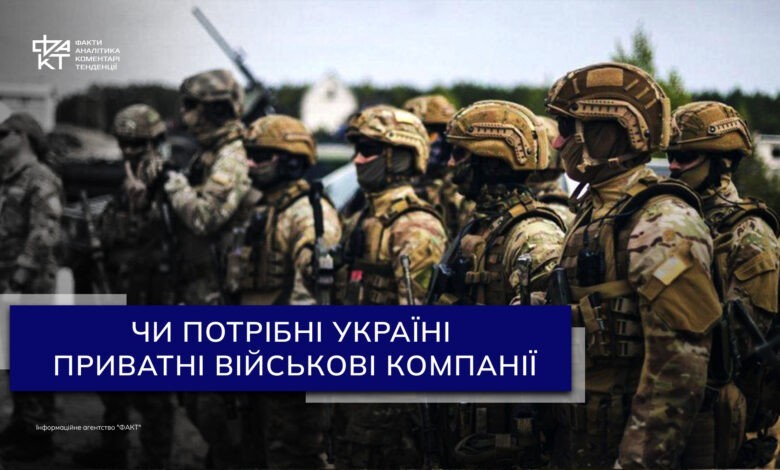
Ukraine, which has been fighting Russian aggression for the third year, is facing new challenges in the field of security. In the conditions of a constant threat and the need for an operational response to it, the possibility of creating private military companies (PMC) is increasingly being discussed in the country. This idea causes ambiguous reactions: some see it as salvation, others see it as a potential danger. Will Ukraine be able to effectively integrate PMC into its security system, and what lessons can be learned from the experience of other countries? Let’s dive into the world of PVC, their history, foreign experience, and evaluate all their advantages and disadvantages.
The Ministry of Defense of Ukraine supported the draft law on the establishment of private military companies (PMCs), which defines the legal status and organizational and legal principles of their activities. It also provides for the establishment of international companies in Ukraine, which will be involved in defense activities both within the country and beyond, providing defense services. The draft law proposes to create a new state body – the State Service of Ukraine for International Defense Companies, which will be responsible for regulating and managing the activities of such companies. It will report to the Main Directorate of Intelligence of the Ministry of Defense of Ukraine and will have control over the activities of private military companies, the registration of agreements for defense services, as well as the accounting of available weapons and equipment.
Historical examples
Today, private military companies (PMCs) are often perceived as a phenomenon of the modern world, but the history of their emergence goes back thousands of years. Historical prototypes of PVC existed in different eras, changing along with the development of society and military affairs. Already in ancient Egypt, mercenaries played an important role in military conflicts. The pharaohs hired foreign soldiers to protect the borders and participate in military campaigns. A similar practice existed in Ancient Greece, where mercenary troops made up a significant part of the army of some polises.
One of the most striking examples is Xenophon’s “Ten Thousand” – a mercenary army that consisted mainly of Greeks and served the Persian claimant to the throne. Their famous journey through enemy lands after the death of the customer is described in Xenophon’s “Anabasis”. The Roman Empire also made extensive use of mercenaries from barbarian tribes to protect its borders. For example, Gothic mercenaries served in the Roman army, and later conquered part of the empire themselves.
In medieval Europe, knights and their wives were often employed by various feudal lords. They could enter into temporary contracts to participate in wars and conflicts, reminiscent of modern PMCs. During the Age of Discovery and the colonization of new lands, conquistadors operated as private military forces funded by private individuals or companies. For example, the East India Company used its own armies to protect its interests in the colonies.
Modern PVCs began to appear after the Second World War. One of the first and most famous was the Executive Outcomes company, which operated in Africa in the 1990s. Founded in 1997 in the United States, Blackwater PMC provided security, intelligence and logistical support services in Iraq and Afghanistan, helping the governments of these countries fight insurgents by providing highly professional military support. However, its activities have been accompanied by scandals, such as the 2007 incident in Baghdad, when company employees opened fire on civilians, which led to numerous casualties and international outrage. DynCorp is another large American PVC that is active in different parts of the world. It ensures the security of government facilities, conducts anti-terrorist operations and provides advice to local law enforcement agencies.
The experience of different countries in the use of PVC allows us to see both the advantages and disadvantages of this approach. On the one hand, the companies listed above, as well as the British G4S and Aegis Defense Services, are actively involved in various tasks in conflict zones, provide security for facilities, convoys, conduct intelligence operations and provide advice to local security forces. Their advantage is the possibility of quick mobilization and a high level of professionalism of employees. At the same time, scandals related to the violation of human rights and the use of excessive force indicate the need for strict control and regulation, which is not always possible to implement. Thus, PVK “Wagner” became infamous due to its participation in the wars in eastern Ukraine and Syria. As is known, “Wagner” is marked by brutality in its operations, which leads to numerous violations of human rights.
Consequently, private military companies have evolved from the mercenaries of antiquity to the high-tech contractors of today, reflecting changes in military technology, politics, and economics. They continue to play an important role in modern conflicts, remaining an ambiguous and controversial phenomenon of our time.
PVC in Ukraine
In Ukraine, there have already been examples of activities of PMC or similar structures. PMC “MAR”, founded in 2015, engaged in security and consulting services in the field of security. She worked in Ukraine and other countries. PVC “Omega Consulting Group” is also a Ukrainian private military company that appeared on the security market after the start of the war in Donbas. She provided security, training and consulting services. In addition, many private security companies in Ukraine performed functions similar to the activities of the PMC. They provided security services, protection of critical infrastructure facilities and ensured security during various events. Financing of these companies was carried out at the expense of contracts with private and state structures.
In the conditions of war, control over the activities of the PMC can be complicated, so it would be expedient to deal with this issue in the post-war period, when the state can develop and implement effective mechanisms of control and regulation, ensuring the transparency and accountability of the PMC. After the war, Ukraine will need to focus on rebuilding and stabilizing the country, so PMCs can play an important role in providing security during the reconstruction, guarding critical infrastructure, helping to restore order, and providing support in the fight against remnants of terrorist groups.
In addition, after the end of the war, Ukraine will be able to enlist international support for the creation of the PMC, taking into account the experience of other countries and receiving advice from international experts. This will help to avoid mistakes and ensure the effectiveness of PMC activities. The creation of the PMC after the war will contribute to the development of the economy, creating new jobs and attracting investments in the field of security. This will help increase the level of security and stability in the country. At the same time, when establishing such companies, one should carefully analyze all the pros and cons so that they are really effective.
Advantages and disadvantages of PVC
Advantages:
- Flexibility and mobility. PMCs can quickly respond to changing conditions, providing operational support where it is most needed. This is especially important in conditions of constant threat and rapid changes in the situation on the battlefield.
- Reducing the burden on regular troops. The use of PVC allows the regular armed forces to be freed for more critical tasks. This increases the efficiency of military operations and ensures better use of resources.
- Economic efficiency. In some cases, the involvement of the PMC may be more economically advantageous than the maintenance of a large regular army. At the same time, they can perform specialized tasks under a contract, which reduces the costs of long-term staff maintenance.
- Specialization and professionalism. PMCs often have a narrow specialization and highly qualified staff, which allows them to perform complex tasks at a high level. This ensures high efficiency in the performance of specific tasks.
Disadvantages:
- Insufficient control. PMCs often operate outside the traditional military hierarchy, which can lead to human rights violations and other abuses. The absence of a clear statutory control and accountability system can create serious problems. That is, the need to control and regulate the activity of PMCs is one of the main conditions for their successful functioning.
- Risks to sovereignty. The use of PVCs can endanger the sovereignty of the state if control over them is insufficient. PMCs may act in the interests of private individuals or corporations, which may conflict with the national interest. This is especially dangerous in times of war and political instability.
- Ethical issues. The involvement of private structures in military operations raises questions about the ethics and legitimacy of such operations. Private companies may have commercial interests that do not always coincide with state priorities. This can lead to a conflict of interests and negative consequences for national security.
- Potential conflicts of interest. Private military companies may be influenced by business interests, which may conflict with national security objectives. This is especially dangerous in times of war and political instability. It is necessary to ensure that the activity of the PMC meets the national interests and is subject to state control.
Prospects for Ukraine
Ukraine has the potential to create effective PMCs that could strengthen the country’s defense capabilities. However, for the successful implementation of this idea, it is necessary to take into account a number of key aspects:
- Development of the regulatory framework. Clear laws and regulations should ensure transparency and accountability of PMC activities. It is important that the legal framework provides mechanisms for control and responsibility. This will help avoid abuses and ensure their effective functioning within the legal framework.
- Creation of a control system. It is necessary to develop effective mechanisms for monitoring the activities of PMCs, including regular inspections, reports and monitoring by state authorities. This will ensure their accountability and responsibility to the state.
- International cooperation. Taking into account historical and foreign experience, as well as cooperation with international organizations, can help Ukraine avoid mistakes and implement best practices in the field of private military activity. At the same time, international cooperation will allow you to gain valuable experience and ensure compliance with international standards.
- Professional training. The creation of educational programs and training centers for PMC employees will ensure a high level of professionalism and the efficiency of task performance. This will contribute to the improvement of qualifications and ensure the execution of missions at a high level.
Therefore, the creation of private military companies in Ukraine can open new horizons in the field of ensuring national security. However, for this move to be successful, all potential risks and benefits must be considered. It is important to ensure the activities of PMCs in such a way that they act exclusively in the interests of the state, are accountable and controlled, to avoid abuses and ensure the transparency of their activities. Only under such conditions can PMCs become an effective tool for strengthening Ukraine’s defense capabilities and ensuring its sovereignty.
Oksana Ishchenko