Queues at the Pension Fund due to identification of pensioners: the Minister of Social Policy explained the reasons

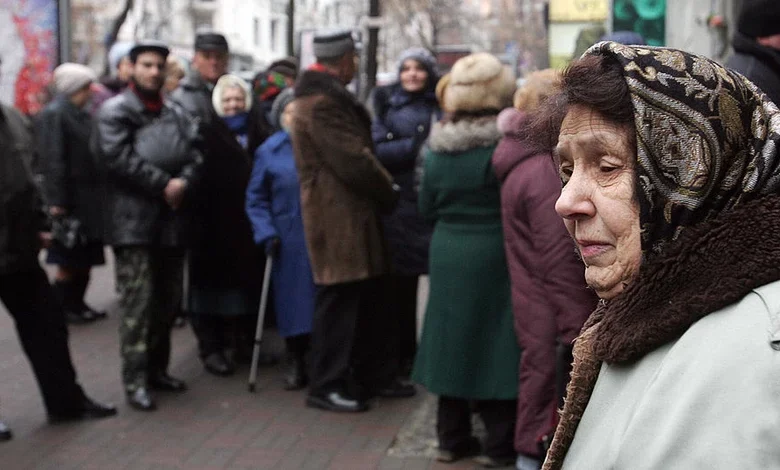
The beginning of 2026 brought not only the usual everyday worries for many Ukrainian pensioners, but also an unexpected test in the form of long queues at the Pension Fund branches. In addition, elderly people did not receive their pensions on time. The reason was their physical identification, which turned into a mass process with a busy schedule, a large number of visitors and nervous expectations of people for whom the pension is often the only stable source of livelihood. Minister of Social Policy Denys Ulyutin explained why the inspection was delayed and what has already been done to mitigate the consequences.
How the situation with massive queues at PFU branches arose
The problem became noticeable back in December, when queues of pensioners trying to undergo physical identification began to accumulate in many Pension Fund institutions. However, the greatest burden fell on January, since it was then that some people did not receive pension payments on bank cards, which immediately prompted them to contact the PFU to find out the reasons for the delay.
Instead of the procedure calmly passing within the specified time frame, the situation began to resemble a wave that gradually rolls in, but then grows sharply when people realize the real threat of losing payments. As a result, the usual working days of the branches turned into a continuous stream of visitors, including the elderly, displaced persons, residents of temporarily occupied territories and citizens abroad.
Minister’s explanation: how many people did not go through the procedure
According to the Minister of Social Policy, Family and Unity of Ukraine, Denys Ulyutin, almost one million Ukrainian pensioners were supposed to undergo physical identification last year. However, a significant part of people did not have time to fulfill this requirement within the established period, which is why the process actually moved into the new year and caused tension. He reported this during the committee hearings “On the status of the organization and verification of payments and identification of persons – recipients of pensions and/or social benefits”
According to him, as of February 1, 2026, 269 thousand pensioners had not undergone physical identification at all. Separately, the minister reported on another category of citizens: almost 70 thousand people passed the identification, but did not properly report that they did not receive pension payments from Russia.
This indicator demonstrates that the problem was not only the lack of verification itself, but also the complexity of bureaucratic requirements that required additional confirmations, which for the elderly or citizens who are outside the controlled territory often turns into a real quest.
The minister explained that physical identification is necessary so that the state can make sure that the person to whom the payments are assigned is alive and truly has the right to receive a pension. If in peacetime such a procedure would be perceived as technical control, then in conditions of full-scale war it takes on a different meaning, because the country is forced to act more carefully, protecting the funds of insurance funds and taxpayers’ money.
In this case, identification plays the role of a safety net that should contain the risks of improper payments, especially in situations where people may change their place of residence, lose their documents, or find themselves in occupied territories where the control of state structures is limited.
Despite the fact that identification was not a new idea, its mass implementation created a domino effect. Since some pensioners did not have time to complete the procedure on time, at the beginning of the year there was a large number of people who applied to PFU branches at the same time, which automatically led to an overload of employees and delays in processing applications.
The situation was further complicated by the fact that not all pensioners immediately understood the difference between passing identification and the need to provide additional confirmation, in particular a notification that they do not receive payments from Russia. Because of this, even those who met some of the requirements found themselves at risk, as they did not formally complete the procedure in full.
As a result, the process resembled a system in which the absence of one document works in the same way as an unclosed case, that is, it blocks the possibility of continuous receipt of funds.
Why did some pensioners not receive payments in January
One of the main factors of tension was that some people did not receive their pension on their card in January. For a pensioner, such a situation is perceived not as a temporary technical delay, but as a danger signal, because money is needed for medicines, payment of utilities, food and other basic expenses.
It was then that the load on the Pension Fund increased sharply, because thousands of people began to apply in person to find out why the funds had not been received. In such conditions, even a well-organized system can begin to malfunction, since a large number of applications simultaneously creates queues that quickly accumulate, like traffic jams on a narrow road during rush hour.
Denis Ulyutin reported that since last week, payments for pensioners who underwent physical identification but did not provide the necessary certificates have been resumed. This decision was a kind of compromise that allowed reducing social tension and returning money to those people who actually confirmed their identity, but did not complete the documentary part of the process.
In addition, the deadline for submitting documents for this category of citizens was extended until April 1. Such a step seems logical, since it gives people more time to collect certificates and at the same time reduces the risk that pensioners will be left without a means of livelihood due to bureaucratic difficulties.
What will be done with those who did not pass identification at all
The Ministry of Social Policy pays special attention to people who did not pass physical identification. According to the minister, the state continues to search for such pensioners and tries to establish contact with them.
This is an important point, since not all cases can be explained by negligence or unwillingness to comply with the requirements. Some pensioners may be in temporarily occupied territories, where access to state institutions is difficult, and some people may be abroad, unable to promptly collect all documents or get advice. In such a situation, each case resembles a separate story, in which war, migration, losses and bureaucracy are intertwined.
Among the key reasons for delays and additional requirements was the issue of confirming that the pensioner is not receiving payments from Russia. The Minister reported that almost 70 thousand people underwent physical identification, but did not submit the appropriate notification, which caused problems with completing the procedure.
This requirement especially applies to citizens of Ukraine who live in temporarily occupied territories or are abroad. The state seeks to avoid a situation where one person can receive payments from two different systems at the same time, which creates risks of misuse of funds and complicates control over social programs.
Denis Ulyutin emphasized that in conditions of a full-scale war, the state is forced to strengthen control over the targeted use of insurance funds and taxpayers’ money. In peacetime, society might perceive such a procedure as an unnecessary precaution, but during wartime, when the financial system operates under constant stress, such mechanisms become a way to maintain the stability of social payments.
At the same time, Ulyutin noted that the physical identification of recipients of pensions and social payments is a generally accepted international practice, that is, it is not an exclusively Ukrainian invention or a temporary requirement that appeared without logic and basis.
How this situation affected people and the work of the Pension Fund
The queues at the Pension Fund have become not only an administrative problem, but also an emotional shock for many pensioners. Elderly people, who find it difficult to stand or wait in crowded rooms for a long time, were forced to spend time and effort to confirm what is obvious to them, that is, their own right to payment.
PFU employees also found themselves in difficult conditions, as they had to simultaneously process documents, consult people, and solve problems that arose due to lack of information or misunderstanding of the procedure. In such a situation, even small delays quickly accumulate, like a snowball rolling down a mountain and becoming larger and larger.