
Suspension of employment relations during war: what changes for employees and employers

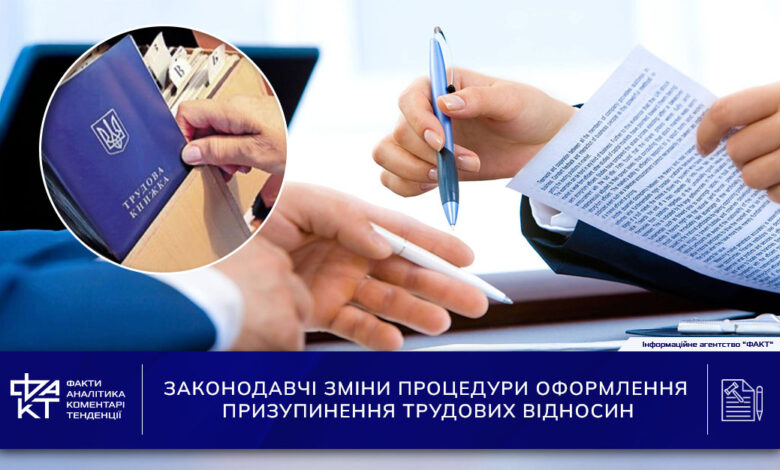
The issue of organizing labor relations during martial law remains one of the most sensitive for employees and employers, as the circumstances of war are constantly changing along with working conditions, the security situation, and the ability to perform labor duties. The next amendments to the Law of Ukraine “On the Organization of Labor Relations During Martial Law” have once again brought to the fore the topic of suspending an employment contract, communication between the parties, and the legal consequences of an employee’s absence from work in areas of active hostilities.
Lawyers from the Repeshko & Partners Law Firm, contacted by our editorial team, commented on how new legislative changes affect the regulation of labor relations during martial law and what employees and employers should pay attention to now.
The issue of organizing labor relations during martial law remains very relevant, as the map of hostilities on the territory of Ukraine is constantly changing. Territories that were considered relatively safe a year ago may now be included in the list of territories where hostilities may occur. In June 2025, the Law of Ukraine came into force, which again amended the Law of Ukraine “On the Organization of Labor Relations under Martial Law”. According to this law, from March 14, 2026, the procedure for registering the suspension of labor relations will change. So, what exactly has changed in labor relations at this time?
The new changes stipulate that during the period of martial law, an employee whose workplace is located in the territory of active hostilities and who is absent from work is not subject to dismissal on the basis of paragraph 4 of part one of Article 40 of the Labor Code of Ukraine. This is a rule according to which an employment contract concluded for an indefinite period, as well as a fixed-term employment contract before the end of its term, may be terminated by the employer only in certain cases, in particular for absenteeism, including absence from work for more than three hours during the working day without good reason.
However, the time of such an employee’s absence from work is not paid and is not included in the length of service that gives the right to annual basic leave, as provided for in paragraph 4 of part one of Article 9 of the Law of Ukraine “On Holidays”. This rule states that the length of service that gives the right to annual basic leave includes the time when the employee did not actually work, but he retained his place of work and was not paid wages in accordance with the procedure specified in Articles 25 and 26 of the Law of Ukraine “On Holidays”.
The exception to this is unpaid leave to care for a child until he or she reaches the age of six, as well as cases where the child has type 1 diabetes, severe perinatal damage to the nervous system, severe congenital malformation, a rare orphan disease, oncological or oncohematological disease, cerebral palsy, severe mental disorder, acute or chronic kidney disease of the fourth degree – then this is the period until the child reaches the age of sixteen.
If the child is assigned the category “child with a disability of subgroup A” or a child who has not been diagnosed with a disability, has received a serious injury, requires organ transplantation or palliative care, such a period is taken into account until the child reaches the age of eighteen.
We remind you that the definition of the territory of hostilities is determined in accordance with the order approved by the Ministry of Development of Communities and Territories of Ukraine dated February 28, 2025 No. 375 On Approval of the List of Territories in Which Hostilities Are (Were) Conducted or Temporarily Occupied by the Russian Federation, which is constantly amended in accordance with the current situation on the front.
The amendments also state that during the period of martial law, the procedure for organizing paperwork on labor relations, registration and maintenance of work books and archival storage of relevant documents in the territories of active and possible hostilities, the list of which is approved in the manner established by law, is determined by the employer independently, provided that reliable accounting of the work performed by the employee and accounting for labor costs is ensured.
The law was also supplemented with new provisions – parts three and four of Article 7, which relate to communication between the parties to the employment contract. From now on, each party to the employment contract is obliged to maintain constant contact, including during the period of suspension of the employment contract. In addition, both the employee and the employer must immediately, but no later than within ten calendar days, notify each other of any changes in their contact details. This includes, in particular, changes in the address of location or place of residence, e-mail address, if any, telephone numbers and other means of communication.
For the employer, fulfilling this obligation involves making appropriate changes to the information about him in the Unified State Register of Legal Entities, Individual Entrepreneurs and Public Organizations. If the employer is an individual who does not have the status of an entrepreneur, he must notify the employee by sending information to the address of location or place of residence, e-mail address and/or telephone number of the employee.
The employee, for his part, must notify the employer of any change in his contact details to the employer’s address or email address, as listed in the Unified State Register of Legal Entities, Individual Entrepreneurs and Public Organizations. If the employee is unable to use postal services or technical means of electronic communications, he may notify the employer by telephone by sending a text message to the employer’s official phone number.
Separately, the law stipulates that if one of the parties to an employment contract fails to fulfill the obligation to update contact details, the other party has the right to communicate using the last known address of location or place of residence, email address or phone number. In such a case, this is considered proper fulfillment of the obligation to notify the other party to the employment contract.
It is also stipulated that if there is no postal communication according to the last known contact details or it is impossible to use technical means of electronic communications, the requirement of the legislation to notify such a party of the emergence or termination of labor rights and obligations, as well as the termination or termination of the employment contract does not apply.
As for the norms on the suspension of an employment contract, the law currently defines it as follows. Suspension of an employment contract is a temporary situation in which the employer temporarily does not provide the employee with work, and the employee temporarily does not perform work under the concluded employment contract. The reason for this is armed aggression against Ukraine, which makes it impossible for both parties to the employment relationship to fulfill the obligations stipulated by the employment contract.
At the time of suspension of the employment contract and for the entire period, the employer is not obliged to pay the employee wages, make guarantee and compensation payments, with the exception of the amounts that were due to such an employee on the day of suspension of the employment contract. Also, the employer is not obliged to provide working conditions necessary for the performance of work, which are provided for by labor legislation, the collective agreement and the employment contract itself. This applies, in particular, to the provision, payment and compensation of any vacations, days of rest, temporary disability benefits, as well as the submission of relevant applications and calculations provided for by the legislation on mandatory state social insurance.
It should be noted that the suspension of the employment contract may occur at the initiative of one of the parties, but the total period of such suspension during martial law, taking into account the terms of its extension, may not exceed 90 calendar days. At the same time, by agreement of the parties, the period of suspension of the employment contract may be extended for a period of more than 90 calendar days, but not longer than until the day of termination or cancellation of martial law.
If the employer decides to cancel the suspension of the employment contract before the termination or cancellation of martial law or before the expiration of the period established in the order or instruction, he is obliged to notify the employee of the need to start work no later than 14 calendar days before the resumption of the employment contract.
It is important that the suspension of the employment contract does not mean the termination of the employment relationship. At the same time, such suspension does not deprive either party of the right to terminate the employment contract on the grounds established by law.
Separately, the law emphasizes: the suspension of the employment contract cannot be used as a hidden punishment. After the expiration of the period of suspension of the employment contract, determined by law, the employment contract is restored in full. If after such resumption the parties cannot fulfill the obligations stipulated by the employment contract, this employment contract is terminated on the grounds established by law.
In the event that the employment contract is terminated, the employer is obliged to settle the account with the employee and issue the employment record, if it is kept by the employer, no later than the next business day after the dismissed employee submits a written request. If there is no access to the employment record or it is lost, the employer must issue the employee a duplicate of the employment record in accordance with the procedure and terms established by law.
It is worth knowing that the employer’s order or instruction, which determines the period of suspension of the employment contract for more than 90 calendar days, loses its validity the next day after the expiration of the period established by law, unless this period has been extended by agreement of the parties. At the same time, such an agreement should be duly confirmed. For example, this may be a statement by the employee and the issuance of a corresponding order or instruction by the employer, or another method agreed upon in advance by the parties to the employment contract.
It should also be taken into account that not only control bodies, but also employees with whom such an employment contract has been suspended can initiate the recognition of an indefinite order to suspend the validity of an employment contract as invalid.
Starting from March 14, the suspension of an employment contract is possible only for 90 days. By agreement of the parties, this period may be extended, but not longer than until the day of termination or cancellation of martial law.
Suspension of the employment contract is formalized by an order, which must include:
- the grounds for the impossibility of performing labor duties;
- the method of exchanging information between the parties to the employment contract;
- the period of suspension (no more than 90 days after, valid after 03/14/2026);
- a list of employees to whom this order applies;
- conditions for renewing the employment contract.
Therefore, we advise employees and employers to closely monitor changes in labor legislation under martial law, update contact information in a timely manner, properly formalize all personnel decisions, and check in advance whether internal documents and actions of the parties comply with the new requirements of the law.


