Swimming season during the war: the State Emergency Service opposed mass bans for Ukrainians

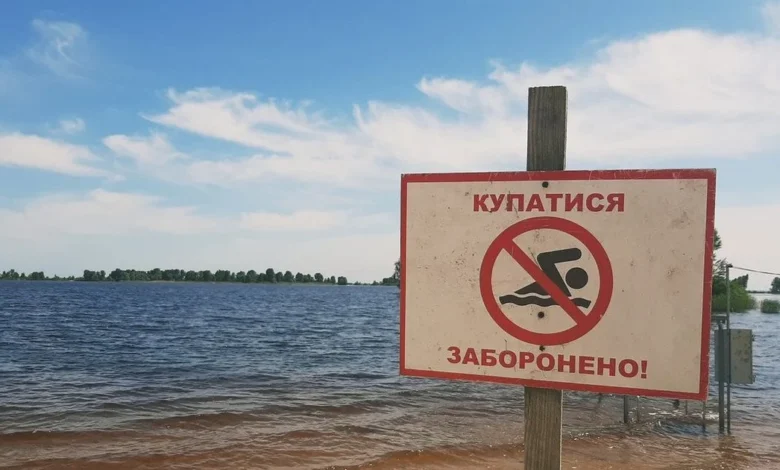
During the war, beach preparation ceased to be a regular seasonal task for municipal services, as each body of water requires an assessment taking into account mine hazards, shelling effects, damaged infrastructure, availability of shelters and the possibility of rapid evacuation of people during an air raid. For communities, this means a much more complex responsibility, because opening a place of rest near the water requires checking the bottom, surveying the coastal area, determining safe routes, organizing rescuers on duty and a clear system of warning the population.
The situation on bodies of water during the war
This problem is particularly acute where bodies of water remain accessible to people, but local authorities do not have sufficient resources or are not ready to take responsibility for their preparation. In such conditions, a ban on swimming seems to be the easiest solution, but it does not remove people from the shores, because in the summer rivers, lakes and reservoirs remain places of mass recreation even with the presence of prohibition signs.
After the official beaches are closed, some vacationers move to natural areas where there is no verified water area, rescue post, medical aid, warning signs, depth control and information about dangerous places. During war, such a transition creates additional risks, because the unsurveyed coast may hide debris, explosive objects or areas that have become dangerous after hostilities, flooding or destruction of infrastructure.
Therefore, the problem of beaches in wartime is not only about allowing or prohibiting swimming. It is a choice between controlled recreation in prepared places and uncontrolled stay of people on wild beaches, where any emergency situation develops faster than in an equipped area. For the State Emergency Service, this is a question of human safety, and for local authorities – a test of the ability to organize real protection of the population instead of an administrative decision that exists mainly on paper.
The position of the State Emergency Service on the ban on swimming in water bodies
The State Emergency Service has drawn attention to the trend in which local governments prohibit swimming in water bodies instead of identifying safe places for recreation and properly equipping them.
Preparing for the summer season in wartime conditions has become a complex security issue for Ukrainian communities, in which the usual opening of the beach requires a much larger amount of work than in the pre-war period. Local authorities must take into account the mine danger, checking water areas, the availability of shelters near recreation areas, the ability to respond quickly by rescuers, as well as the risks of mass presence of people near the water during air raids. Due to these circumstances, communities are increasingly choosing the simplest model — a complete ban on swimming, which allows them to avoid the costs and responsibility for arranging beaches.
“We are observing an alarming trend when local governments, realizing that a sufficiently large amount of work needs to be done to properly prepare the beach and water area to protect people, decide to ban swimming.
The question here is – who are we deceiving? People will swim anyway. Every year we see this, every year people die, and every year we prohibit the use of water bodies,” – noted Viktor Vitovetsky, Director of the Department of Civil Protection and Preventive Activities of the State Emergency Service of Ukraine
According to him, local authorities often realize that preparing a safe water area requires significant resources, technical work and organizational decisions, after which they decide to simply close access to water bodies.
The State Emergency Service draws attention to the fact that the closure of official beaches actually moves people to even more dangerous places. If the territory is not equipped for recreation, the lack of control creates a much higher risk of tragic incidents than the functioning of a prepared beach with defined swimming limits and the presence of rescuers.
The Director of the Department of Civil Protection and Preventive Activities of the State Emergency Service insists that communities should objectively assess their own capabilities and identify at least individual territories where it is possible to ensure control over the safety of people. In such places, it is necessary to conduct a bottom survey, check the coastal zone, organize rescuers on duty, install information signs and determine the rules of conduct during an air alarm.
“I would like to call on the relevant officials of local authorities, local self-government bodies to objectively assess the capabilities, consider possible places for the population to relax and still ensure the safety of these water bodies so that the population can relax safely,” Viktor Vitovetsky emphasized.
The statement by the State Emergency Service official came on the eve of the active summer season, when the issue of opening beaches traditionally becomes a practical issue for local authorities.