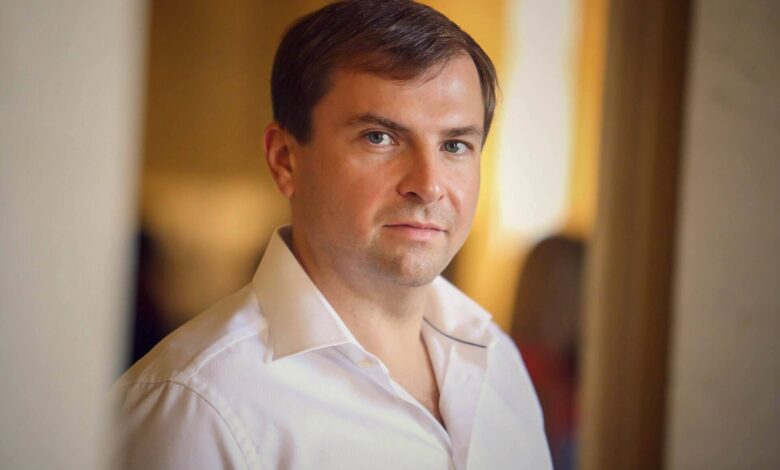
The Pechersky District Court of Kyiv approved the plea agreement of People’s Deputy Fedor Khrystenko, who was previously suspected of committing high treason. This was reported by the court’s press service.
The court refused to disclose the date of approval of the agreement and the specific punishment received by the deputy, noting that the hearings were held in closed session. The press service emphasized that security measures were applied in the case in accordance with the law “On ensuring the security of persons participating in criminal proceedings”, therefore information about the agreement is limited until the cancellation of these measures.
On November 27, the Anti-Corruption Center reported that Khrystenko’s agreement had been submitted to the court, citing anonymous sources in law enforcement agencies. Initially, the case was considered by judges Svitlana Shaputko and Anna Hrydasova, but a decision was made to disqualify them, after which the case was transferred to judge Oleg Solovyov. Later, data on the case disappeared from the registers, and judge Solovyov went on sick leave.
On December 4, Prosecutor General Ruslan Kravchenko confirmed the existence of the agreement, noting that it could not be made public at this time due to issues of the suspect’s safety and national security. He also assured that the agreement does not contain any mention of the leadership of anti-corruption agencies and is not related to Operation Midas.
Fedor Khristenko was elected as a deputy from the 46th district in the Donetsk region from the pro-Russian party “Opposition Platform – For Life”. After the start of the full-scale Russian invasion, he left to live in the United Arab Emirates.
On July 21, 2025, the Prosecutor General’s Office announced Khristenko’s suspicion of high treason in absentia. This happened against the background of SBU searches of NABU employees, and the next day the Verkhovna Rada adopted a law that limited the powers of NABU and SAPO, later restored after protests and international criticism.
According to the investigation, back in 2014, Khrystenko was recruited by the Russian Federal Security Service, and he met with its representatives in Russia and Belarus 11 times. Later, he allegedly enlisted the cooperation of an acquaintance who worked in law enforcement agencies investigating corruption and economic crimes.
The investigation claims that during 2020-2021, Khristenko and his acquaintance created a mechanism to influence the leadership of the anti-corruption agency, passed information to Russian representatives, and helped avoid criminal liability for individuals controlled by the Russian Federation.
The deputy denied his guilt while still in the UAE, and did not comment on the case after returning to Ukraine. His lawyers also refrained from commenting. The NABU head reported that he had asked the SBU to provide evidence of FSB influence on his agency through Khrystenko, but had not received it.
It is currently unknown whether the plea agreement includes the initial version of the investigation into Russian influence on anti-corruption agencies.