The founder of the World Economic Forum in Davos is suspected of manipulating data on the competitiveness ranking of countries

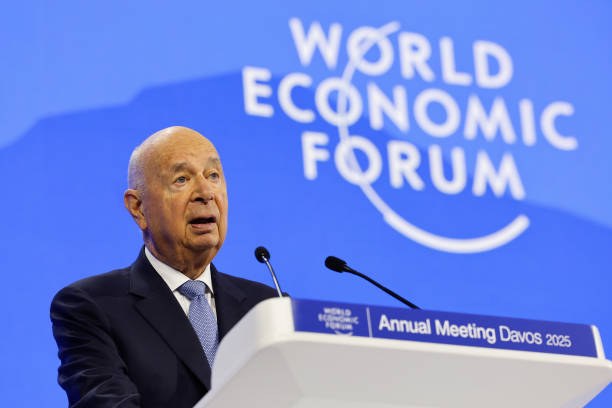
Klaus Schwab, the founder of the World Economic Forum in Davos (WEF), who headed this organization for more than half a century, is suspected of making changes to the results of one of its most famous products, the global competitiveness rating. About this informsSunday newspaper.
In April, the WEF supervisory board received a letter expressing concern about the state of management, corporate culture, and accusing Schwab and his wife of personally using the forum’s resources without proper oversight. Schwab dismissed the allegations as baseless, but it was decided at an emergency meeting on Easter that he would step down as chairman of the board and an investigation into possible financial and ethical misconduct would be launched.
Preliminary results of the investigation show that over the past ten years, Schwab and his wife have spent about 900,000 Swiss francs ($1.13 million) from the forum’s funds on needs unrelated to its activities, including personal travel. In addition, Schwab repeatedly interfered with the preparation of the report on competitiveness, changing or hiding unfavorable ratings of individual countries, in particular from the Middle East and North Africa region, as well as India. This was allegedly done to preserve good relations or to avoid political complications. In one case, according to the newspaper, after a conversation with a government official of one of the countries, Schwab recommended postponing the publication of a report with a negative assessment.
Lawyers from law firm Homburger, who conducted the investigation, found that after the change in the methodology for calculating the ranking in 2017-2018, India lost more than 20 positions, while the UK rose from 7th to 4th place.
In response, Schwab sent a letter to the WEF team with the message:
“We have to protect our relationship with India before Davos 2019.”
He feared that Indian Prime Minister Narendra Modi might cancel the visit. At the same time, Schwab pointed out that Great Britain “should not get any improvement” because “Brexit supporters will take advantage of this”.
In his message, he said he supported the new methodology, but stressed “we simply cannot do it this year” because the good relationship with India, in which he has “invested so much”, could be destroyed. He suggested not publishing the report at all. In the end, the report did come out, but India was ranked 40th – just one place lower – and the UK was eighth – also one place lower than in the previous ranking.
In addition, in January 2022, Schwab provided confidential interim results to a representative of the government of one of the Arab countries whose rating had deteriorated significantly and asked for “critical feedback.” After that, he insisted on postponing the publication until the end of the pandemic and informed the official about it. The report has not been published since then.
The Global Competitiveness Ranking has been published since 2004 and was much more than just a table – it was an analytical report of more than 600 pages, based on 110 indicators and the results of surveys of 13,500 respondents from 142 countries. It was developed by leading international experts.