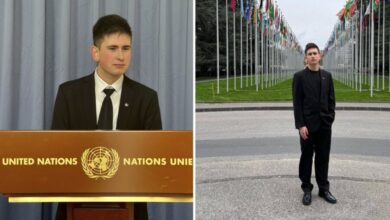
UK Minister of State at UN Security Council meeting says Russia is using Ukrainian children as a tool of war

The international community has received further confirmation of the systematic practice of forced deportations of Ukrainian children by the Russian Federation in times of war. This process involves tens of thousands of children who suffer from the loss of their families and are also under psychological pressure due to attempts to impose a new identity. At a meeting of the UN Security Council, the UK Minister of State for Europe, North America and Overseas Territories, Stephen Doughty, stated that such actions constitute a direct attack on children’s rights and undermine the foundations of the future generation.
The scale of forced deportations and their consequences
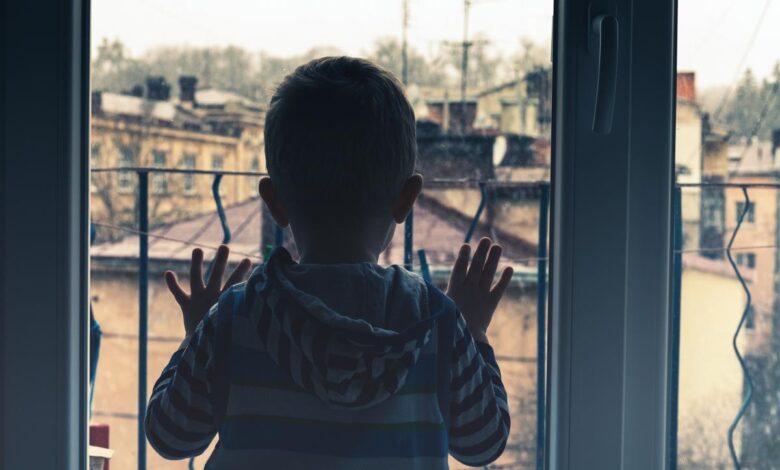
Doughty emphasized that during the full-scale invasion, Ukrainian children spent about four thousand hours under the sounds of air raid sirens, which is the equivalent of more than five months of continuous fear. Constant sirens, power outages, and the threat of shelling cause irreversible damage to mental health, creating a generation deprived of security and a stable environment.
International response and political steps
The Ukrainian side systematically documents cases of abduction. According to the Presidential Commissioner for Children’s Rights Daria Gerasymchuk, as of the end of March 2023, more than 19.5 thousand children were known to have been taken from the temporarily occupied territories. Due to access restrictions and the conditions of the occupation, an accurate count remains impossible.
The international community has repeatedly condemned these actions. In April 2023, 49 states in a joint statement condemned the Russian Federation for attempts to legitimize the abduction of children during a meeting of the UN Security Council. The United Kingdom actively blocked the broadcast of the Russian representative’s speech, calling for those responsible to be held accountable through international courts.
On March 17, 2023, the International Criminal Court issued an arrest warrant for the President of the Russian Federation and the person responsible for children’s rights in Russia, suspecting them of the illegal deportation and transfer of Ukrainian children. Currently, there is no single mechanism that allows for the effective return of deported children home, although some successes have already been recorded: in February 2026, Ukrainian President Volodymyr Zelensky announced the return of 2,000 children to their homeland.
The need for a just solution and the prospect of peace
According to Stephen Doughty, restoring justice in this matter should include the return of all abducted children and prisoners of war, as well as bringing those responsible to justice. He emphasized that without such steps, any peace cannot be called complete. The UK continues to support initiatives aimed at the safe return of children and the protection of their rights, while emphasizing international solidarity in the fight against systemic violence and violations of international law.
The situation with the deportation of Ukrainian children demonstrates not only the terrible consequences of war for its youngest victims, but also the urgent need for international intervention, effective return mechanisms and comprehensive support to restore the psychological and social well-being of children who have become the object of a targeted policy of violence.