Unified control in the field of demining: why in humanitarian demining they propose to consolidate powers into one system

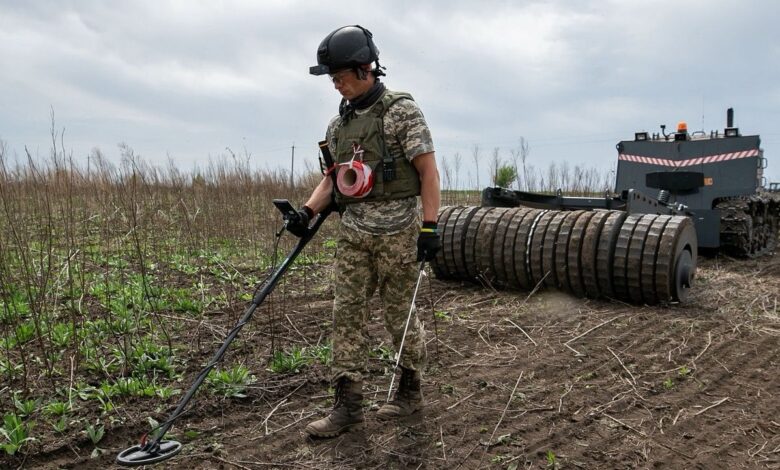
The sphere of humanitarian demining in Ukraine remains one of the most sensitive for the state, since the safety of people, the return of land to use, as well as the movement of budget funds in an extremely expensive sector depend on the quality of the organization of work. Now the question of who should be responsible for the full cycle of work – from identifying a contaminated area to issuing a certificate after the site is cleared is becoming increasingly acute.
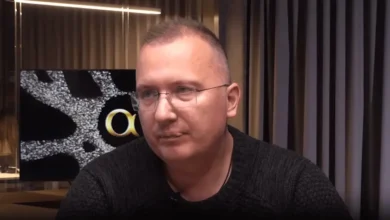
The need to concentrate control within a single management vertical was stated by Volodymyr Baida, director of the Humanitarian Demining Center. According to him, such a model would make it possible to eliminate the dispersion of powers, strengthen the responsibility of all participants in the process and reduce the risks of abuse in an industry where mistakes or dishonesty have an extremely high price.
Volodymyr Bayda drew attention to the fact that about 13 state institutions are involved in the organization of the mine action sphere in Ukraine. With such a structure, each individual element of the system exists within its own competence, however, the overall picture, control of the sequence of actions and assessment of the quality of the operators’ work are complicated, since responsibility is distributed among many structures.
This state of affairs, according to the director of the Humanitarian Demining Center, has long remained a systemic problem. As he noted, the Center itself constantly points to it, and it was also confirmed by a thorough study by the Tony Blair Institute, which was conducted last year. The lack of a common understanding of processes and coordinated coordination within a single vertical, according to this logic, creates additional difficulties where the procedure should be continuous, transparent and controlled at each stage.
At the heart of the proposed approach is the idea of a single body or a single vertical that would control the entire humanitarian demining route. Such a system would include identifying the contaminated area, organizing its cleaning, verifying the result, and issuing a document confirming the completion of the work. Volodymyr Bayda believes that only with such an approach can a truly transparent process be ensured, in which each step will have a clear center of responsibility.
With this initiative, the Humanitarian Demining Center, as its director reported, has repeatedly appealed to state authorities, insisting on the need for legislative changes. This applies not only to organizational reformatting, but also to updating the rules that would provide the authorized structure with sufficient tools for control, inspection, and response to violations.
Separately, Volodymyr Bayda gave an example of the state program of compensation for farmers for demining, which was implemented by the Center. According to him, thanks to the implementation of this mechanism, the state budget was saved hundreds of millions of hryvnias. He attributes this result to the fact that the system made it possible to significantly reduce the cost of demining.
The announced figures, which the director of the Center refers to, look indicative: the cost of work has decreased from 22–30 dollars to 13 cents per square meter. In the context of the scale of contamination of Ukrainian territories, this indicator is of particular importance, since even a slight change in the cost per unit of area ultimately affects large budget amounts. That is why the issue of control over procedures, according to Bayda, goes far beyond the boundaries of internal administration and concerns the effectiveness of state policy in general.
According to the director of the Center for Humanitarian Demining, one of the most important gaps in the current system is related to the function of independent quality control. Without such a tool, it is difficult to promptly check how operators perform work on the ground, whether they adhere to standards, and whether the result meets the safety requirements on which people’s lives and the further use of cleared territories depend.
Volodymyr Bayda reported that the Center has already created a separate unit in the staff that is capable of quality control, and is also undergoing the accreditation procedure for specialists. After the completion of this training, the Center expects that it will be possible to strengthen the industry with independent verification of the work of operators. In practical terms, this will mean field trips and direct control of the work performed, without which any system remains vulnerable to errors, official negligence or manipulation of documents.
Assessing the consequences of the current model, the Director of the Center emphasized that the lack of a function of independent control, coordination and a holistic understanding of the processes by all participants already has tangible consequences. One of them, he called criminal proceedings against individual operators. In this context, the problem arises not as a technical dispute between departments, but as an issue that affects the reputation of the industry, trust in the results of the work and the safety of citizens.
According to Bayda, the Humanitarian Demining Center has been providing all the documents necessary for a comprehensive investigation since the beginning of its activities, since the launch of the compensation program and after the opening of criminal proceedings. The Center also, according to him, cooperates with law enforcement agencies to help objectively establish all the circumstances within the framework of the relevant proceedings.
A special emphasis was placed in the statement on the inspections that have already been carried out regarding the mechanisms used by the Center in the field of humanitarian demining. Volodymyr Bayda noted that these mechanisms have repeatedly been controlled by the bodies that monitor the use of budget funds. He listed the inspections of law enforcement agencies, the Accounting Chamber and the State Audit Service.
In such an area, this point is of fundamental importance, since humanitarian demining combines several complex components at once: significant funding, a large number of performers, a high level of technical responsibility and constant public interest. Under such conditions, any control system must be based not only on administrative decisions, but also on a proven ability to withstand external inspection.
The initiative that Volodymyr Bayda is talking about involves modernizing the legislation in such a way that the Center receives a quality control function enshrined in law. Only with such authority, which will have a clear legal basis, will it be possible to build a consistent system of monitoring the actions of operators, assessing the condition of sites, compliance with clearance procedures and final confirmation of the result.
This is a change in the approach to the organization of the industry itself, where today many processes remain diluted between different participants. In the option proposed by the Center, the demining chain should be built as a single sequence of actions with a clear center of coordination, verification and responsibility. It is with such an approach that the Center associates the opportunity to make procedures more transparent and reduce risks to the budget and human safety.
In addition, Volodymyr Bayda appealed to humanitarian demining operators, law enforcement agencies and control structures with a call for comprehensive coverage of any episodes and cases in this area. Such an approach, according to him, is needed in order to prevent neglect of mine safety rules among citizens, for whom information about risks remains a matter of personal protection.
At the same time, the Director of the Center emphasized that individual manifestations of dishonesty should not cast a shadow on dozens of operators who perform their work conscientiously and within the law. In this part, his position boils down to distinguishing between individual violations and the everyday work of the industry, which continues to perform critically important tasks under conditions of heavy workload and high responsibility.