After the start of a full-scale war in Ukraine, the issue of aid to the civilian population became an international issue. States, charitable organizations, municipalities — all these structures participate in supporting Ukrainians. However, initiatives originating from private individuals, including children, deserve special attention. There are rare cases when schoolchildren abroad independently organize fund-raising for the needs of Ukrainian children. One such example was the story of an 11-year-old schoolboy from Denmark, who did not just sympathize with Ukrainian children, but decided to act.
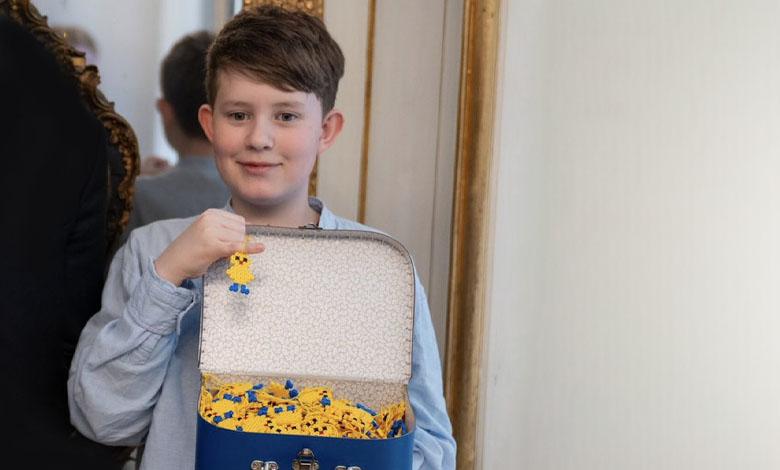
11-year-old student Jens from Denmark independently initiated the production of Easter figurines from beads. He decided to use the money he earned to buy school backpacks for children from Ukraine who were forced to leave their homes or lost things as a result of hostilities. About it on April 23 reported First Deputy Prime Minister of Ukraine and Head of the Ministry of Economy Yulia Svyridenko.
A boy from Denmark made symbolic products in the shape of chickens, a traditional Easter image in Europe. He sold these figures for a symbolic price, informing each buyer that the funds would go to support Ukrainian children. For several weeks before Easter, Jens sold his products in the school environment, among acquaintances, at local events. His actions were not coordinated with any official organization, had no grant or charitable support. The initiative arose from the child’s personal decision.
Jens collected more than 8,000 dollars for Ukrainian children, his act is an example of personal participation in aid, regardless of age. The choice of school backpacks as the purpose of collection is not accidental. After evacuation or loss of housing, a large part of Ukrainian children found themselves without basic things, including school supplies. In many cases, humanitarian aid covers only the bare essentials — clothes, shoes, hygiene products. Therefore, school kits, in particular backpacks, require separate financing.
The backpack in this context is a basic element of the educational process that allows the child to function in the school environment without additional restrictions. In the case of children who have lost a large part of their personal belongings, it is also a tool to restore the learning rhythm.
Although the example of Jens seems exceptional, similar practices have already been repeatedly recorded in the countries of the European Union. In Poland, children collected stationery for Ukrainian schools, in Germany they held charity marches. However, the majority of such actions were organized by adults — through schools, parents’ committees, and public organizations.
In the case of Jens, it is a completely individual initiative that was not tied to a state or institutional platform. This is important from the point of view of research on children’s civic activity. It is not about mobilizing in response to a call, but about an independent decision with an understanding of causes and consequences.
The help provided by children from abroad has a double meaning. On the one hand, it provides material support to those who need it. On the other hand, it demonstrates the formation of solidarity among the young generation in peaceful countries. This is not a declaration of sympathy, but an action with a concrete result. Jens’s act is an example of how children engage with the topic of war not by heroizing it, but by giving practical support to those in a vulnerable position.