Archaeologists have deciphered the name of a female ruler who ruled the ancient Maya city of Coba in the 6th century AD. The discovery, made through the decipherment of new hieroglyphic inscriptions, reveals new aspects of the political and religious organization of one of the most important centers of Maya civilization on the Yucatan Peninsula. reports Heritage Daily.
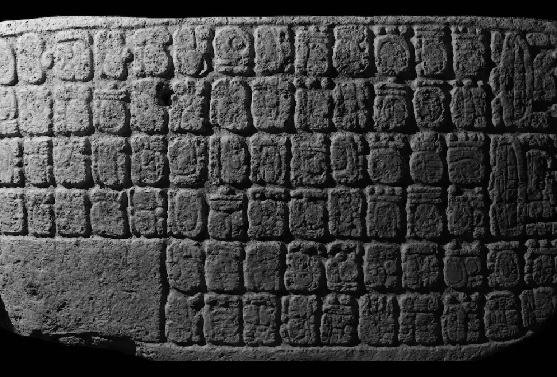
Researchers from Mexico’s National Institute of Anthropology and History (INAH) have discovered the inscriptions on a monument known as the “Cornerstone”. The artifact was found in 2024 near a reservoir in the Nojoch-Mul group, the area where Coba’s tallest pyramid is located.
A team led by David Stewart of the University of Texas at Austin and Octavio Esparza Holguín of the National Autonomous University of Mexico (UNAM) identified the figure depicted on the monument as X Chac Chin, confirming that she was the ruler mentioned on other monuments in the city.
The deciphered text contains a series of dates and ritual descriptions that record important events in Coba’s dynastic history. One of the inscriptions is dated 9.6.15.6.9 Long Count (May 12, 569 AD) and refers to the creation of a political office called “calumte” at the site of Kewitznal, which translates as “place of the deer mountain”.
The monument shows X Chak Chin at the center of this event, identifying her as a major political figure. Additional inscriptions found on Panel 7 and Steles 26 and 30 link her to architectural features, including the ball court in Group D, and mark the end of the katun cycle on 8 December 573 AD. Variants of her name, including Ix Chak Chin Yopaat, as well as references to the deity Kaviil, indicate her high status within the ruling dynasty of Coba.
Scholars also note that the inscriptions mention her connection with local protector gods, in particular with Bolon Tsakab Ajaw, or “Lord of Countless Generations”, who in Maya mythology was associated with the origin of Coba.
This discovery deepens our understanding of the role of women in the political life of the Maya civilization and demonstrates how the rulers of Coba combined power with religious symbolism and natural images. In addition, it confirms the importance of the city as one of the main ritual and administrative centers of the time.