Scientists have discovered one of the world’s longest series of dinosaur footprints in a quarry in southern England, shedding new light on the lives of these giants 166 million years ago. The discovery was made at the Dewars Farm quarry in Oxfordshire during a major excavation by teams from the Oxford University Museum of Natural History (OUMNH) and the University of Birmingham, reports Arkeonews.
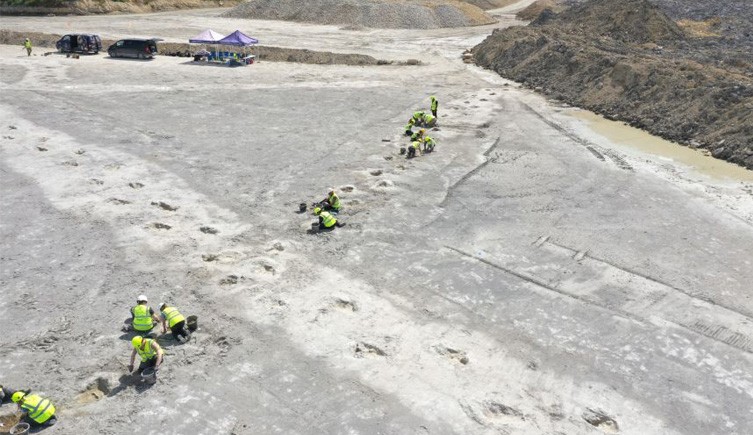
At the site, which is part of Britain’s so-called “dinosaur highway”, researchers have found hundreds of footprints, including a 220-metre track, the longest continuous dinosaur track in Europe. They were probably left by a Cetiosaurus, a plant-eating sauropod that could grow up to 18 metres long. The site also contains the tracks of a Megalosaurus, the first dinosaur to be officially described in 1824, providing a rare glimpse into the dynamics of predator-prey relationships at the time.
Dr Duncan Murdoch, a geologist at OUMNH, called the site a “fascinating snapshot of life in the Jurassic period”, noting that the preservation of the tracks is so detailed that it shows how the soil was deformed under the dinosaurs’ feet.
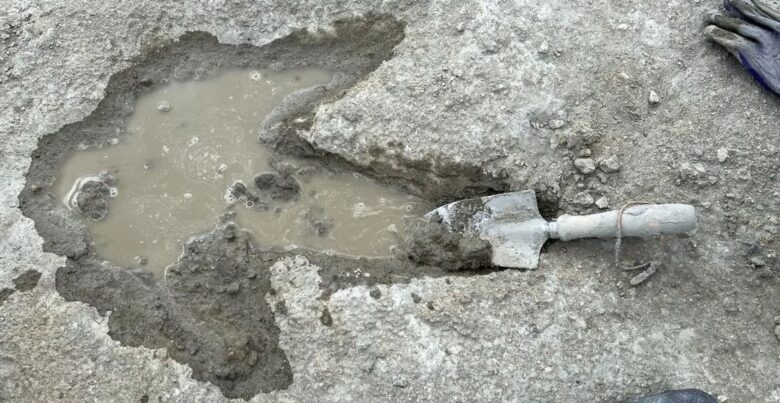
The excavation began after a quarry worker noticed unusual mounds in the clay. The project involved more than 100 scientists, students and volunteers, who recorded more than 200 footprints and converted them into digital format, creating accurate 3D models.
By analyzing the footprints, researchers were able to recreate the movements of the dinosaurs. Professor Peter Falkingham from Liverpool John Moores University created a 3D animation of the gait of a cetiosaurus, recording even such small features as weight transfer or stopping in mid-step. One unique footprint indicates that the animal supported itself on only one leg, which gives an exceptional insight into the behavior of creatures of that era.
Megalosaurus tracks in the same area indicate that the nine-meter predator may have shared space with the giant cetiosaurus. Some of the footprints even overlap, raising questions about the possible interaction between herbivores and predators. Professor Kirsty Edgar from the University of Birmingham said the findings reveal information about dinosaur movements, their interactions and the tropical ecosystems they inhabited.
More than 20,000 drone photos were taken to document the site, creating a permanent digital archive of the site for science and education.
Professor Richard Butler, a palaeobiologist at the University of Birmingham, said:
“We can learn so much more from this site, which is an important part of our national heritage”.
Despite the challenging conditions – extreme weather and dense sediment – the tracks have been preserved under layers of limestone for millions of years and were only discovered through quarrying. These unique footprints not only reflect the movement and behavior of ancient giants, but also demonstrate the efforts of modern science in studying the history of the planet.
“This place is not only a scientific treasure – it tells a story of discovery, teamwork and our enduring fascination with the giants who once walked our earth”, concluded Professor Butler.