In Brussels, 72 delegations discussed ways to return Ukrainian children abducted by Russia: new sanctions and tens of millions of euros in aid

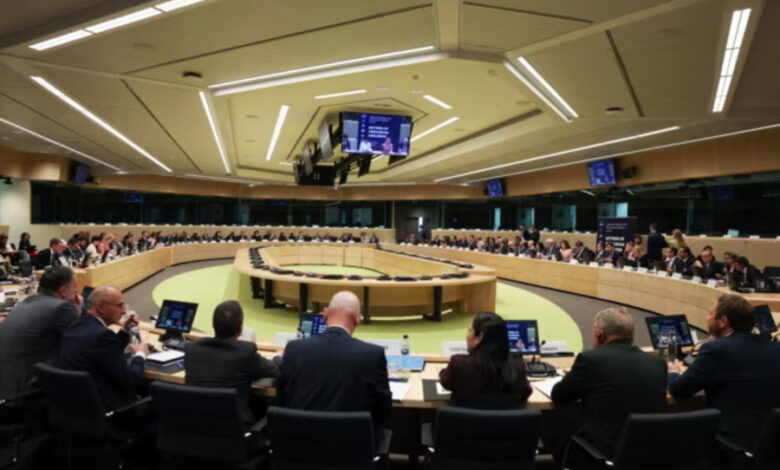
The problem of illegal deportation of Ukrainian children to Russia and the occupied territories remains one of the most pressing humanitarian issues of the war. Ukraine insists on the unconditional return of minors, international partners are trying to expand the mechanisms of search and pressure on Russia, and European institutions are increasingly involved in documenting deportations, financing rehabilitation programs and sanctions policy. These issues became the main topic of an international conference in Brussels, which brought together dozens of delegations from different countries and international organizations.
International meeting in Brussels
72 delegations from states and international organizations gathered in the Belgian capital to discuss the work of the International Coalition for the Return of Ukrainian Children. The European Union announced the involvement of its diplomatic missions in various countries, assistance in verifying the whereabouts of children, support for their adaptation after return and participation in the preparation of the evidence base for future cases against those involved.
During the opening of the conference, European Commission President Ursula von der Leyen recalled the story of Sasha, a boy from Mariupol, who was separated from his mother by Russian soldiers and tried to take him to Russia. He managed to return to Ukrainian-controlled territory thanks to his grandmother and the Ukrainian government, but the search for his mother is ongoing.
European officials used the story as an example of how Russian claims about “humanitarian evacuation” conceal the separation of children from their families, transfers without the consent of legal representatives, and further ideological influence.
EU position on Russian statements
EU chief diplomat Kaia Kallas stressed that Russia does not have an effective system for the return of Ukrainian children. According to the European Commission, there are more than 210 places in Russia, occupied Crimea and Belarus where Ukrainian children are undergoing so-called “re-education”.
“Russia claims to be conducting ‘humanitarian evacuations’, but there is no Russian system for the return of Ukrainian children,” EU Chief Diplomat Kaia Kallas stressed during the conference.
The conference participants spoke about cases of forced adoption, ideological pressure, and militarized programs in camps and centers. The institutions mentioned include Orlyonok, Alye Parusa, and Smena, which, according to the EU, participate in programs for Ukrainian children with pro-Russian content.
European diplomats have already worked to promote the topic of Ukrainian children in international organizations. Before the UN General Assembly voted on the relevant resolution on December 3, 2025, EU missions in countries outside Europe explained the situation to governments and refuted Russian narratives.
At the same time, the diplomatic channel has had limited results in the practical return of children. According to data provided by European representatives, out of approximately 2,100 children who returned to Ukraine, only about 100 were returned through diplomatic mechanisms. Most children returned thanks to volunteers, public organizations and trips by relatives, which are often associated with high risks.
How children are returned
Operations to return children do not have a single scenario, since each case depends on the child’s age, where he is, the presence of relatives, documents and control by Russian structures. According to informed European officials, sometimes a mediator has to go to the child, explain a conditional signal in a crowded place, after which another person tries to take the child away from the escort.
The cost of such missions can range from one to ten thousand euros, since funds are needed for transportation, documents, accommodation and other related expenses. The EU is not usually directly involved in such operations, but it supports the processes that begin after return: psychological assistance, adaptation, social support and safe collection of evidence for law enforcement.
EU Commissioner for Enlargement Marta Cos stated that the return of a child does not end the process, as many children suffer severe psychological trauma. The European Union has announced almost €50 million for initiatives related to the return of Ukrainian children and strengthening the system of their protection in Ukraine.
Part of the funds should be directed to help children and communities, and at least €1 million to strengthen Ukraine’s digital capabilities so that families can file claims with the Register of Losses, including on behalf of abducted children.
Particular attention is paid to establishing the whereabouts of minors. If a child was taken away at the age of four or five, it is difficult to identify them after a few years, so identity verification, data collection and tracking of movements become important. The Ukrainian system has already helped to establish the whereabouts of over 1,300 children and obtain information on another 1,800.
New sanctions against those involved in the removal of Ukrainian children
On May 11, the EU announced a package of sanctions against 16 individuals and 7 organizations involved in the illegal deportation, forcible transfer and assimilation of Ukrainian children. The list includes Russian officials, leaders of youth camps, military-patriotic clubs and structures linked to the Russian Ministry of Education.
In total, the European Union has already adopted over 100 sanctions decisions in this area. Ukraine calls on partners to expand personal restrictions, including to the lists of officials, program organizers and Russians who participated in the illegal adoption of Ukrainian children.
Ukraine’s position on exchanges
Foreign Minister Andriy Sibiga stated in Brussels that Russia had proposed including deported Ukrainian children on exchange lists. Ukraine rejected this approach, as the return of children cannot be a subject of political bargaining or part of compromises.
Sibiga stressed that the issue of children should be included in any future peace process as a separate and mandatory element. He also called on partners to move from statements to a roadmap for the return of children, to strengthen the search, reintegration and execution of the International Criminal Court warrants for Vladimir Putin and Maria Lvova-Bielova.
The meeting in Brussels showed that the international coalition is moving on to broader practical work: finding children, financing their support, documenting crimes, and imposing sanctions on those involved. For Ukraine, the main thing remains the return of every child without conditions, exchanges, or political agreements.