Payment from UNICEF for children with disabilities of subgroup A: who will receive it and in which regions

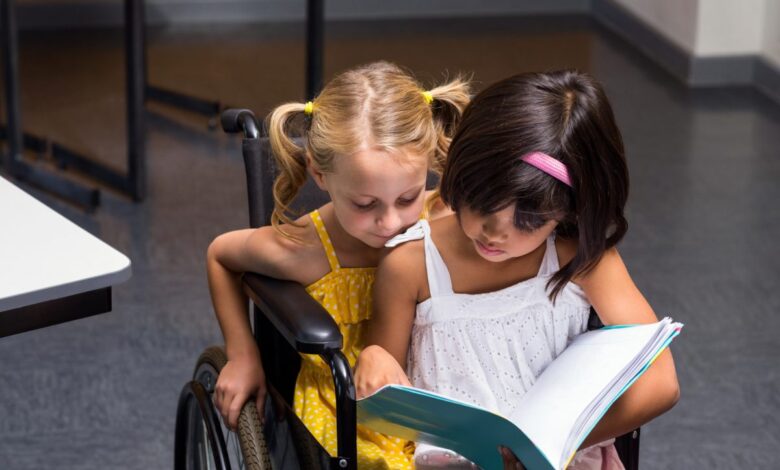
Support for families raising children with disabilities of subgroup A remains one of the most important areas of social assistance during the war, since it is such families that are most dependent on stable payments, predictable state decisions, and timely participation of international organizations. The Ministry of Social Policy, Family, and Unity of Ukraine reported that, with the support of UNICEF, a one-time targeted cash assistance has been provided for this category of children, and also specified the amount of the payment, the territories to which it applies, and the purpose of the funds.
This is a separate program aimed at children with disabilities of subgroup A, for whom additional expenses for living, care, heating, medicines, and seasonal needs are often significantly higher than in most other households. In this case, the assistance has a clearly defined monetary amount and is provided as a one-time payment that the family can use in accordance with its own priorities related to preparing for the cold period.
What the Ministry of Social Policy reported
The Ministry of Social Policy, Family and Unity of Ukraine explained that a one-time cash benefit will be paid with the support of UNICEF specifically to children with disabilities of subgroup A. The decision to implement such a mechanism is enshrined in a document signed by the Minister of Social Policy, Family and Unity of Ukraine Denys Ulyutin and the newly appointed head of the UNICEF representative office in Ukraine Anne-Claire Dufay Desmoulins.
The signing of such a document has practical significance for thousands of families, because it is not a general declaration of intentions, but specific assistance with specific conditions. In conditions where social support for vulnerable categories of the population often requires the participation of both the state and international partners, such a payment becomes a way to specifically strengthen the protection of those families for whom even one additional amount can have a tangible impact on everyday life.
What is the amount of the payment provided
For children with disabilities of subgroup A, a one-time targeted cash assistance of 6,500 hryvnias is provided. The amount is fixed, that is, it is a specific amount of funds that does not change depending on the region or individual types of expenses within the program.
In this decision, not only the amount of the payment itself is important, but also its purpose, since the funds should help families cover needs that are especially acute during preparation for the winter period. For families with a child with a disability of subgroup A, such expenses are usually not limited to one area, because their household needs are often related to special living conditions, additional care, maintaining heat in the home, and purchasing necessary things without delay.
Who can receive assistance
The program applies to children with disabilities of subgroup A, as the ministry stated separately and unambiguously. It is this category that is defined as the recipient of a one-time targeted assistance, which is paid with the support of UNICEF.
Since the message emphasizes this group of children, the key condition is the child’s belonging to the appropriate category. No other additional criteria are specified in the above explanation, therefore the main emphasis is on the status of the child and on the fact that the payment is addressed to families raising children with disabilities of subgroup A in certain regions.
In which regions will funds be provided
The payment applies to nine regions of Ukraine. This list includes Chernihiv, Dnipropetrovsk, Donetsk, Kharkiv, Kherson, Mykolaiv, Odesa, Sumy and Zaporizhia regions.
This list indicates that the program is focused on regions for which the issue of social support remains particularly sensitive due to the security situation, the burden on families and the need for additional resources to get through the autumn-winter period. At the same time, the published information refers to these nine regions, so the geography of the payment is outlined quite clearly and is not presented as nationwide for all regions without exception.
What is allowed to spend 6,500 hryvnias on
The Ministry of Social Policy clarified that this assistance can be used for any needs related to preparing for the winter period, and the final decision on the use of funds is made by the family. This model seems to be the most practical, because families raising children with disabilities of subgroup A have very different expenses, and a strict restriction on the list of goods or services would not take into account real life circumstances.
It is especially emphasized that the payment is not tied to narrowly defined categories of purchases. This means that the family can independently determine what to spend the money on: on insulation of the home, the purchase of necessary things, covering seasonal expenses or other needs directly related to preparing for the cold season. This approach provides more flexibility than assistance in the form of a pre-limited set of goods, because in one family the primary need may be one thing, and in another – completely different.
For families with a child with a disability of subgroup A, any seasonal burden on the budget is felt more strongly than in normal conditions, since their expenses are rarely limited to basic household needs. Additional funds in such a situation have not a symbolic, but a completely applied meaning, because they help to cover needs that cannot be postponed or replaced with cheaper solutions without losing the quality of care or comfort for the child.
UNICEF’s participation in such a program also shows that international support in Ukraine continues to be directed primarily at the most vulnerable categories of citizens. During a full-scale war, it is the combination of state mechanisms and resources of international organizations that often makes it possible to introduce targeted payments that do not dissolve in general promises, but reach specific families with a specific amount of assistance.