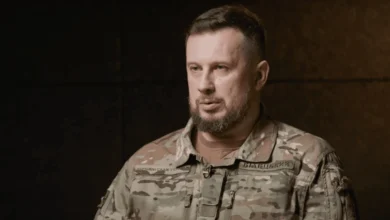
The State Statistics Service explained when it will be possible to conduct a population census in Ukraine

The issue of accurate population accounting in Ukraine has long become a complex statistical and political problem, because after the start of the full-scale war, the demographic picture of the country underwent drastic changes due to mass migration, internal displacement of people, losses and a sharp drop in the birth rate, which makes any estimates of the population size only approximate.
The Head of the State Statistics Service Arsen Makarchuk explained that conducting a full-fledged census under the current conditions is impossible, since a significant part of the territories has been destroyed or is located near the line of hostilities, while millions of citizens have ended up abroad or have moved within the country, which makes it impossible to accurately record the population size using traditional methods. The population estimate is still available, but it has not yet been made public.
“We have calculated these figures, we are now discussing what can be made public from this. This information is not being disclosed yet, but I hope we will find a consensus with the government and be able to publish it.
Even after the end of the war, it is necessary to wait one and a half to two years for social processes to take place – the return of people, demobilization, reintegration into society. Only then will it make sense to record the state and size of the population. Even after the end of the war, it is necessary to wait one and a half to two years for social processes to take place – the return of people, demobilization, reintegration into society. Only then will it make sense to record the state and size of the population,” he noted.
According to him, conducting a census always requires a stable situation, when the state is able to cover all regions of the country, and the population lives at more or less fixed addresses, which allows statistical services to record the real demographic structure. After the start of a full-scale war in Ukraine, it is impossible to obtain accurate data on the population, since conducting a traditional census is currently impossible due to constant movements of people and mass migration.
According to Makarchuk, the last official estimate of the population of Ukraine from the State Statistics Service is dated February 1, 2022. Since then, due to the lack of a census, there has been a “pluralism of estimates” made by various bodies: state and international, scientific institutes and private researchers.
“In particular, the UN Population Fund, the World Bank and the International Monetary Fund carry out their calculations. Forbes Ukraine conducted its own research,” the official explained.
He emphasized that different estimates allow choosing a figure “depending on the goals,” but accuracy within plus or minus 4 million people does not allow achieving significant detail without conducting a full census.
As Makarchuk notes, under such conditions, statistical services are forced to use other tools to assess the demographic situation, in particular, analytical calculations based on various sources of information. The corresponding population estimates have already been prepared, but they have not yet been made public, since the issue of their publication is being agreed with the government. Such calculations may take into account data from the border service, registers, information from international organizations and sociological research, but even in this case they remain approximate.
The last official estimate of the population of Ukraine was published as of February 1, 2022, that is, before the start of the full-scale war, which significantly changed the demographic situation in the country. After that, various institutions try to estimate the population using their own calculation methods, including Ukrainian government bodies, international financial institutions, and think tanks.
Such estimates are made, in particular, by the United Nations Population Fund, the World Bank, and the International Monetary Fund, but the results can differ by several million people, since each organization uses different approaches to analyzing migration and demographic changes.
Makarchuk gave the example of Estonia, where more than fifty different indicators are used to determine the population, including analysis of water consumption, the volume of household waste, and the frequency of using elevators in multi-story buildings. He noted that the population census covers not only the counting of residents, but also the assessment of socio-economic living conditions, age and gender structure, as well as the level of infrastructure accessibility, which is of great importance for the work of state bodies and municipalities, in particular when planning the development of regions and social programs.
Ukraine is also considering the possibility of conducting a new census within the framework of the pan-European demographic data collection cycle, which is planned for 2030. This round of the census involves the use of modern methods of collecting information, which are significantly different from the traditional household survey used in previous decades.
Such approaches include the active use of state registers, electronic databases, as well as sample sociological surveys, which allow obtaining more accurate and more timely statistical information. Combining different data sources can significantly reduce the cost of conducting a census and at the same time increase the accuracy of the results, since digital registers allow tracking many demographic indicators in a constantly updated mode.
According to Makarchuk, Ukraine’s participation in such an international statistical project could be an important stage in restoring the state system of demographic accounting after the end of the war, as it would allow obtaining more complete and accurate data on the country’s population, its structure and migration processes.