Children of war among explosives: 12-year-old boy blew himself up in a yard in a village in the Khmelnytskyi region

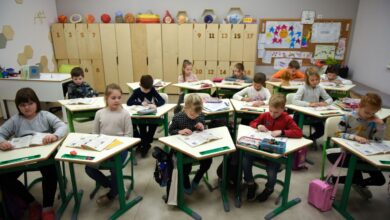
A full-scale war leaves behind tens of thousands of objects capable of killing and maiming even in the rear – in the streets, yards, empty buildings and on the roadsides. In the hands of the population, a huge amount of weapons, ammunition, improvised explosive devices and trophy ammunition has been accumulated, which is spreading around the country imperceptibly without permits, accounting and control. This shadow arsenal turns the everyday environment into a minefield, especially dangerous for children. Almost every day in the information feed there are news about explosions or the use of weapons. And more and more often it is not about adults, but about children who found “something interesting” near the garage, in the attic, in the grass or while playing in the forest. Danger becomes commonplace. An ordinary backyard in the rear region can turn out to be the site of a tragedy.
An accident in Khmelnytskyi region
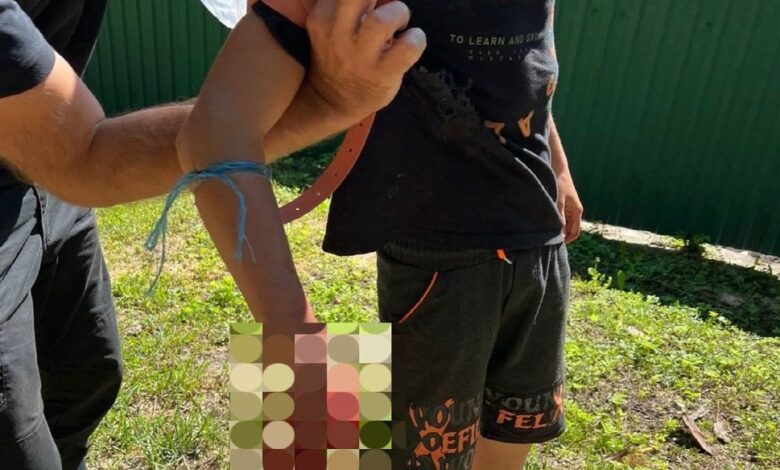
This happened on August 1, 2025 in the village of Zhilyntsi in the Khmelnytskyi region. Around 11:00 a.m., an explosion rang out in a private household in the village of Zhilintsi, Yarmolynetsk community. A 12-year-old boy who was visiting was injured. By information Khmelnytskyi district police department, the child found an unknown object in the yard, which exploded in his hands.
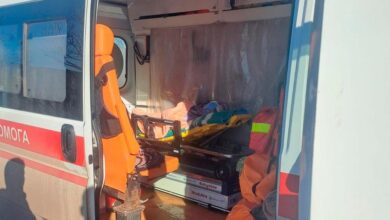
The explosive wave caused serious injuries to the boy. Several fingers on his right hand were torn off. The child was urgently hospitalized in the trauma department of the city children’s hospital. Police officers were the first to arrive at the scene. They stopped the bleeding, applied a tourniquet and provided first aid before the ambulance arrived. At the same time, it is clarified that the object that blew up has not been identified. Investigative actions are being carried out, but even without a final conclusion, it is clear: we are talking about an explosive object that got into a residential environment.
A symptom of war that is ignored
The explosion in Zhilyntsi is not an isolated incident. Similar situations occur in various regions of Ukraine, including those that were not the zone of active hostilities. Some of them are the result of careless storage of ammunition by the military or civilians. The other is the result of the uncontrolled proliferation of weapons due to “trophies” left in families.
However, children are the most vulnerable category in this situation. They do not distinguish a grenade from a toy, are not able to adequately assess the risk, are interested in what lies in the grass or on the shelves of the barn. As a result, amputations, burns, penetrating wounds, and sometimes fatalities. But there is no systematic response to this phenomenon.
During a full-scale war, there is no nationwide program to check households for weapons and explosive remnants of war. The authorities rely on “voluntary surrender” and the police act after the fact, when the explosion has already happened. Mine safety manuals have been handed over to schools, but the amount of prevention does not correspond to the scale of the threat.
Communities, especially rural ones, have no resources either for preventive visits or for an information campaign. Families do not realize that the object found by the child is not a “dangerous game” but a potential murder. In many cases, parents do not even know that there is a grenade brought by someone, a disassembled signal rocket or part of ammunition lying in the attic or in the storeroom. And the most acute thing here is that in the end it is the child himself who suffers from injuries, and not the criminal who brought the explosives into the residential area.
What parents should do to avoid tragedy
- Conduct a thorough audit of everything stored in the household. This does not only apply to weapons or ammunition. A suspicious metal object, remnants of military equipment, objects that look like ammunition spare parts — all of this should be removed from the home and reported to the police or emergency services.
- Do not keep “souvenirs” from the front. Shells, projectile fragments, grenade casings, signaling devices — all this is not harmless. Even if the item appears to be “inoperative”, the residual charge or mechanism can be triggered by shock or heat.
- Explain to the child that it is impossible to touch unfamiliar objects. A regular conversation is more effective than a one-time lecture. Children should know that they should immediately inform adults about the finds and not touch them.
- Show the child a photo of explosive objects. Without a visual representation, the child will not be able to recognize the danger. It is better to explain clearly once than to hope that she “doesn’t go to play in the barn”.
- Teach the algorithm of actions when a dangerous object is detected. Do not approach, do not touch, do not call other children, move away and inform adults – this should be a reflex.
- Report any finds to the police or emergency services. There is nothing shameful in calling the rescuers if a suspicious object is found. Better to check than lose a child.
- Control what children play with in the yard, in the yard, in the country. Especially in old buildings, sheds, garages, forest strips and fields.
- Call for help if you suspect that a weapon is stored in the house. This can be done anonymously. The main thing is not to silence the risk.