Forced evacuation of children from active combat zones without their parents’ consent: President signs law

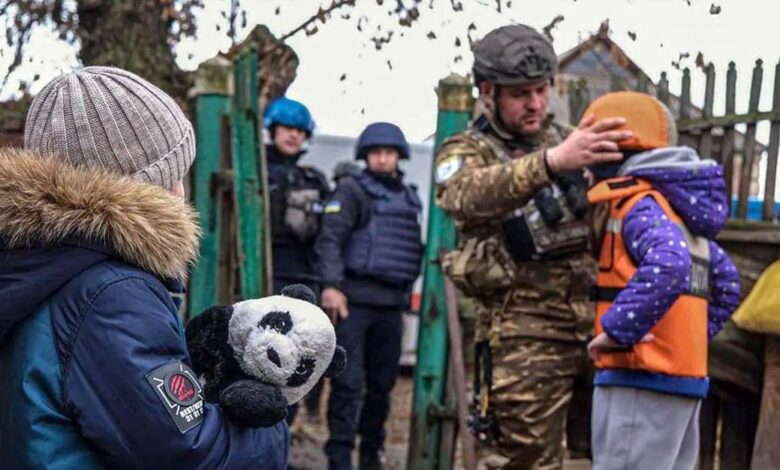
The decision to evacuate children from areas where active hostilities are ongoing has become one of the most difficult challenges for the state in the conditions of a full-scale war, as it involves the need to act quickly and decisively where delay can cost lives, while at the same time not destroying the basic principles of family autonomy and parental responsibility. In front-line communities, the issue of the departure of minors arises every time the security situation worsens, but in practice many families postpone this decision until the last minute, which is why rescue operations often take place in conditions of direct threat. Therefore, the state has found mechanisms that would allow to ensure the protection of children even when adults do not agree to leave a dangerous area.
What the new law changes
President of Ukraine Volodymyr Zelenskyy signed Law No. 12353, which provides for the right of the police to evacuate children from areas of active hostilities even in the absence of parental consent. Information about the signing of the document is published in the law card on the official website of the Verkhovna Rada.
After signing the law, the procedure for evacuating children from areas where active hostilities are ongoing acquires a clearer procedure and additional response tools. According to the information published in the document card, decisions on mandatory evacuation are made by military administrations based on a submission from the military command, which means an assessment of the security situation taking into account the real threat to the civilian population.
The organization of the departure of children is carried out by the police together with one of the parents or a legal representative, and the issue of forced evacuation is agreed with the Coordination Headquarters. In cases where adults refuse to leave an area under shelling or in close proximity to the front line, the law provides for the possibility of removing a child without their consent and then handing them over to guardianship authorities.
Reasons why families delay leaving
The perception of danger in conditions of prolonged hostilities is often dulled, especially in communities that have lived for months or years under the sounds of shelling and gradually become accustomed to the constant threat. Some parents refuse to evacuate due to reluctance to leave their own homes, farms, or property, which seem to be the last symbol of stability in a situation of uncertainty, while others fear the uncertainty of temporary accommodation and the loss of jobs or sources of income.
Added to this are emotional factors related to the belief that hostilities will not affect their specific settlement, as well as distrust of information about the level of threat. In some cases, the decision to stay is motivated by the belief that it is easier for the child to bear the danger with the family than to experience the stress of moving to another region.
The cost of delay for rescuers and police
The practice of evacuation in conditions of active hostilities shows that operations often have to be carried out at a time when the situation is already deteriorating sharply, and the exit routes are at risk of shelling. In such circumstances, police officers, rescue workers and volunteers are forced to operate in a high-risk area, risking their own lives to evacuate families who until the last moment did not dare to leave their homes.
Each delay means more complicated logistics, limited response time and a greater likelihood that the evacuation will take place to the sound of explosions or with blocked roads. The evacuation of children at a critical moment requires additional resources and coordination, as it is necessary to provide transportation, a safe route, and further placement.
Balance between parents’ rights and children’s safety
The introduced mechanism of forced evacuation is causing public debate, as state intervention in family decisions is always a sensitive topic. At the same time, the law is aimed at minimizing risks for children who cannot independently assess the level of danger and depend on the decisions of adults.
The transfer of evacuated children to guardianship authorities in the event of parents’ refusal to leave is considered a temporary measure designed to ensure safety in conditions of a real threat to life. This approach is based on the priority of protecting the child in a situation where delay can have irreversible consequences.
The adoption of Law No. 12353 was a response to the practical challenges that arose during evacuations from settlements near the front line, where the danger is growing rapidly and leaves minimal time for decision-making. The experience of previous operations has shown that the lack of clear powers complicated the actions of the services, which were forced to convince families to leave even when the situation became critical.
The updated procedure is designed to ensure prompt decisions in cases where children’s lives are at stake, as well as reduce risks for those carrying out the evacuation. In the realities of war, the issue of the safety of minors goes beyond private choice, as the consequences of delay affect not only the individual family, but also those who take responsibility for their rescue.