The surrogacy industry for foreigners: how war turned reproductive programs into a criminal market

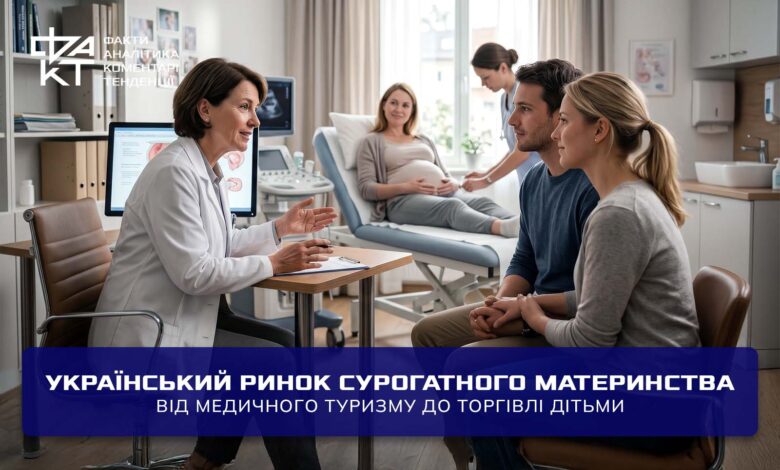
Behind the impeccable medical facade of Ukrainian reproductive clinics lies a cynical reality: the country has become the largest baby factory in Europe, where the female body has become a devalued production resource, and newborns – a commercial product ordered from a catalog. The war did not stop this conveyor belt, but only intensified the exploitation. For thousands of Ukrainian women who have lost their homes, jobs or husbands due to hostilities, surrogacy has become a radical tool for survival. They destroy their health with aggressive hormone therapy and risk their lives from obstetric complications for a meager percentage of the sums that foreign customers pay to shady intermediaries. The main danger is that due to blurred legislation, this multi-million dollar business has become a legal front for transnational crime.
Foreign Demand and Ukrainian Vulnerability: The Economics of Surrogacy During War
Over the past decade, the country has effectively become one of the key global hubs of surrogacy, where a liberal legislative framework has paradoxically combined with high medical standards and moderate, by world standards, pricing. Before the full-scale invasion, foreign capital formed the absolute core of this sector: data recorded by the Ministry of Justice for 2019 show that out of 1,499 babies born, 1,418 were transferred to foreign citizens, which is almost 95% of the total volume of programs. Cumulative estimates from government and industry sources indicate that by 2022, more than 6,500 children will have been born in the country thanks to these technologies, with a stable share of foreign couples in these processes exceeding 90%.
The escalation of hostilities in 2022 transformed, but did not stop, this business, giving it a specific socio-economic color. Deep financial destabilization, massive job losses, and forced internal displacement of millions of citizens created conditions under which participation in reproductive programs became for many women a radical survival tool in conditions of chronic vulnerability. According to information from the Ministry of Health, published in 2025, during the first year and a half of the full-scale war, surrogate mothers gave birth to more than 1,000 children. This demonstrates an average dynamics of 600–800 babies per year, while maintaining a focus on foreign demand.
The indicators of individual market participants confirm such viability of the industry, where the Kyiv clinic BiotexCom alone reported over 600 births for the period 2022–2023. Official financial calculations show that a standard cycle of in vitro fertilization or intracytoplasmic sperm injection costs an average of 2.5–3.2 thousand euros, which, with a total intensity of 33,364 cycles, generates about 80–110 million euros of annual turnover, excluding surrogacy. The surrogacy programs themselves are estimated at 38–50 thousand euros for a full package, which during the war period provided the market with an additional 25–75 million euros per year.
As of 2025, the National Health Service of Ukraine recorded 38 institutions providing in vitro fertilization services, including 31 private institutions. The legal landscape in which this capital-intensive sector operates remains critically blurred due to the lack of a specialized profile law. Instead of comprehensive regulation, the activity is based on the general provisions of the Civil Code and the Ministry of Health Departmental Order No. 787 of September 9, 2013, which automatically preserves deep legal gaps. Such regulatory shortcomings become an ideal breeding ground for criminal abuses, unscrupulous brokerage and the functioning of transnational human trafficking networks, where the child begins to be perceived as a commercial object, and the female body as an exploited production resource.
Babies on demand: the criminal side of the reproductive business
Large-scale schemes dismantled by law enforcement agencies clearly demonstrate how legal medical tools are transformed into a criminal business if market demand begins to dictate the rules of morality and law. Ukraine remains one of the few states where commercial surrogacy is permitted at the legislative level, and it is this liberal legal regime that has become a cover for the activities of a sophisticated syndicate.
An illustration of these risks was the large-scale criminal scheme, dismantled by law enforcement in Kyiv in 2021. The organizers of the criminal group, involving the staff of one of the private reproductive clinics, massively involved Ukrainian women in fictitious marriages with foreigners and falsified medical documentation to legalize assistive technology programs. The ultimate goal was to take newborns abroad, mainly to China, under the guise of biological offspring of the customers.
The investigative actions allowed to seize 3 babies and transfer them to state social services, however, at least 13 children had already left the country at the time of exposure, and the seized draft documentation contained information about more than 160 similar orders. With the cost of a full package of services for a foreign client in the amount of up to 70 thousand dollars, the direct surrogate mothers received only a meager share – from 6 to 8 thousand dollars, while the main marginal profit settled in the pockets of shadowy intermediaries and medical functionaries.
Organized in 2023, the criminal group, which included 2 co-organizers and 10 direct executors, cynically converted reproductive technologies into a conveyor belt for selling babies to foreigners. The leaders in this structure were the heads of private medical companies that specialized in infertility treatment and had branches in Kyiv and Kharkiv, which allowed them to give the appearance of legitimate medical practice to criminal operations. The extensive architecture of this group united specialists of various profiles – from administrators and managers of clinics to a professional lawyer who was responsible for the legal cover-up of transactions and interaction with state authorities.
The suspects deliberately focused their search for future surrogate mothers and egg donors on the territory of the Kharkiv region, targeting women who were in a state of deep financial hardship or general vulnerability. The financial proportions of this business clearly indicate the extremely high margin of the criminal industry. Foreign customers living in countries with a strict ban on surrogacy paid from 50 to 70 thousand euros for one child. At the same time, direct surrogate mothers who carried the babies were allocated only about 12 thousand euros, although even these promised amounts were often reduced unilaterally by the organizers.
The further mechanism of legalization abroad was based on the conclusion of clear agreements, according to which women after giving birth undertook to sign an official permit to export the child and to consent to the child acquiring foreign citizenship. Any attempts by surrogate mothers to deviate from the initial conditions or to express disagreement were severely suppressed by psychological pressure, threats and intimidation from the participants in the scheme. During its activities, the group managed to organize the illegal movement of 8 babies across the state border, and law enforcement officers managed to block another attempt to remove a child already under the current martial law.
The scale of operational documentation of this network is confirmed by more than 40 simultaneous searches conducted in offices, clinics and places of residence of the suspects. The result of these actions was the seizure of a large amount of evidence: computer equipment, mobile phones, draft records, electronic media, significant amounts of cash, as well as medical documentation, copies of Ukrainian and foreign passports and powers of attorney for representation of interests.
A separate episode that reveals the cynicism of the defendants was the attempt to illegally transfer a newborn girl in Kyiv in 2025, where the biological factor became the main obstacle to the criminal plan. A couple of Chinese citizens turned to a Kyiv clinic and paid for the birth of twins — a boy and a girl. However, the mandatory genetic examination required for official registration revealed an unexpected deviation from the criteria for surrogacy. The DNA test confirmed the foreigner’s paternity only in relation to the boy, while the newborn girl had no biological connection to the customers.
Despite the obvious lack of legal grounds, representatives of the medical institution tried to circumvent the law and developed a plan to use judicial mechanisms to fictitiously recognize the paternity of Chinese citizens. While the foreign couple returned to their homeland with their son, the clinic managers left the girl in a rented apartment in the capital under the supervision of a hired nanny, waiting for the necessary court decision to complete the paid transaction. The child was removed under the full protection and guardianship of the state, and all 12 members of the criminal organization were officially charged with human trafficking and the creation and participation in a criminal community under the articles of the Criminal Code of Ukraine.
Motherhood under the pressure of poverty: who and why is involved in surrogacy programs
The social profile of women who agree to participate in the programs clearly indicates a direct relationship between poverty and reproductive donation. Residents of depressed or low-income regions consider this step as almost the only opportunity to obtain capital for the purchase of housing, financing the treatment of relatives or the basic maintenance of their own children. However, financial impasse often prevents them from adequately assessing the complex threats that accompany this process at each stage. Physical risks include the aggressive effect of mandatory hormone therapy on the body, as well as the likelihood of severe obstetric complications during childbirth, which can irreversibly undermine health or create a direct threat to life.
The psychological spectrum of consequences is no less traumatic, as women face postpartum depression, deep stress, irresistible emotional attachment to the unborn child, and acute stigmatization by society. Legal defenselessness exacerbates these factors, because under current legislation there are no effective mechanisms that would guarantee unconditional fulfillment by customers of their financial obligations. Economic vulnerability is also manifested in the fact that in the event of complications during pregnancy, women are usually left alone with medical expenses, deprived of adequate insurance coverage and legal support.
The end of reproductive exports: what will change draft law No. 13683
Initiated by the Cabinet of Ministers, draft law No. 13683 “On the use of assisted reproductive technologies”, registered in the Verkhovna Rada on August 22, 2025, marked the first attempt at a systematic codification of this sensitive area of medicine and law at the level of a separate law. The innovations proposed by the government cover a wider range of procedures, including in vitro fertilization, reproductive cell donation and surrogacy, but the key vector of criticism was the harsh revision of the rules for foreign citizens.
The document introduces an imperative requirement, according to which a prerequisite for participation in surrogacy programs is the presence of Ukrainian citizenship of at least one of the future parents. This approach effectively deprives foreign couples of the opportunity to legally use reproductive services in Ukraine, completely changing the landscape of domestic medical tourism.
The authorities’ desire to limit commercial reproduction reflects an attempt to remove the country from its unofficial status as one of the largest global hubs of surrogacy, where financial factors have long dominated legal guarantees. The drafters of the regulatory act focus on protecting Ukrainian women from potential exploitation. The government’s argument is further strengthened by the complex demographic context caused by prolonged military operations and a deep population reproduction crisis. The position that dominates among supporters of the bill is that in conditions of a critical decline in human capital, the reproductive potential of Ukrainian women should not become a resource to meet the needs of foreign families. Although opponents of this thesis note that the share of such births is insignificant in terms of national statistics and is not capable of significantly affecting the demographic situation.
Along with restrictions for foreigners, the government initiative establishes a strict procedural framework for the domestic market, detailing the requirements for surrogate mothers themselves and fixing a clear algorithm for concluding specialized agreements. The draft law requires only a written form and mandatory notarization of contracts, which should minimize the risks of legal uncertainty regarding the biological origin of the child and the mutual obligations of the parties.
Despite the declared intentions to bring order to the sector, representatives of reproductive medicine and specialized medical associations express serious concern about the excessive regulatory weight of the document. The expert community predicts a sharp decline in the industry, since the ban on foreign patients is devoid of clear medical or rational legal justifications, and the artificial narrowing of the market can block the development of technologies and significantly limit access to high-tech medical care for Ukrainians themselves.
Goods, services or human rights violations: three models of surrogacy
The world’s experience in regulating surrogacy is clearly divided into two camps: some countries approach it purely practically and commercially, while others strictly prohibit or limit it for reasons of morality and protection of human rights. Instead of a single global standard, modern jurisprudence has formed a mosaic of several mutually exclusive models. Each of these systems tries in its own way to balance human reproductive rights, commercial interests of the parties and fundamental principles of bioethics, which leads to radically opposite legal consequences for participants in the process in different corners of the planet.
The first group is formed by states that have chosen the path of full or partial liberalization of the commercial sector, where the carrying of a child for financial reward is integrated into the official legal and economic system. The most illustrative example here is certain regions of the USA, in particular the state of California, where the legislation provides maximum protection for genetic parents. The American model is based on detailed contracts concluded even before pregnancy, which allows the names of customers to be automatically entered into the baby’s birth certificate without lengthy adoption procedures. Similar loyalty, albeit with certain internal specifics of pricing regulation and medical supervision, is demonstrated by the legal systems of Georgia, Kazakhstan, South Africa and Colombia, creating favorable conditions for foreign patients and turning reproductive medicine into a noticeable industry of cross-border services.
A diametrically opposite position is taken by countries that view the commercialization of childbirth as a threat to human dignity and a hidden form of exploitation of women. An absolute ban on all types of surrogacy is in force in Germany and France, where the concept of the inalienability of the human body prevails, according to which motherhood cannot be the object of civil law agreements. French courts have long refused to recognize the parental rights of citizens who have used such services abroad, which has created long-term legal difficulties for newborns. Similar strict restrictions are observed by legislators in Italy, Spain, Switzerland, Austria, Norway and Sweden, where violation of this norm provides for criminal liability for both medical personnel and intermediaries.
Between these two poles, an intermediate compromise option has been formed, known as the altruistic model, in which the law allows assistance in correcting reproductive problems, but completely excludes financial benefits for the woman carrying the child. У Великій Британії, Канаді, Австралії, Нідерландах, Данії, Бельгії, Новій Зеландії та Португалії біологічні батьки мають право компенсувати лише документально підтверджені медичні витрати, втрачений заробіток чи купівлю спеціального одягу.
Головна юридична складність британського або канадського зразка полягає в тому, що сурогатна матір автоматично визнається законною матір’ю немовляти після пологів, і замовникам доводиться отримувати судовий наказ про передачу батьківських прав, причому будь-яка згода жінки до моменту народження дитини вважається такою, що не має юридичної сили.
Окрему категорію становлять держави, які пройшли шлях від повної свободи репродуктивного ринку до його радикального згортання під тиском внутрішніх соціальних криз. Індія, Таїланд, Непал, Камбоджа та Мексика тривалий час функціонували як головні центри дешевого комерційного сурогатного материнства, проте зіткнулися з масовими випадками правової незахищеності сурогатних матерів та залишенням дітей з інвалідністю іноземними замовниками. Внаслідок цього згадані країни ухвалили закони, які або повністю заборонили цю практику для іноземців, або обмежили її виключно безкорисливою допомогою всередині власних громад для офіційних подружніх пар. Така трансформація наочно ілюструє, як відсутність жорстких біоетичних запобіжників змушує уряди переходити від стимулювання ринку до його повної ліквідації задля захисту національних інтересів та прав людини.
Сурогатне материнство в Україні давно переросло рамки суто медичного чи комерційного феномену, перетворившись на гостру етичну та геополітичну проблему, яка безпосередньо зачіпає фундаментальні права дитини, біологічних батьків та сурогатних матерів. Подальше її ігнорування загрожує системною деградацією правових інститутів країни. Суспільство потребує не косметичних регуляторних змін, а жорсткого спеціального закону, здатного чітко регламентувати умови укладання договорів, встановити прозорі фінансові стандарти, захистити права жінок і запровадити суворий кримінальний та адміністративний нагляд за діяльністю приватних репродуктивних центрів та агенцій.