Anti-corruption strategy in graphic style: “portrait of a Ukrainian corrupt person” from the NACP

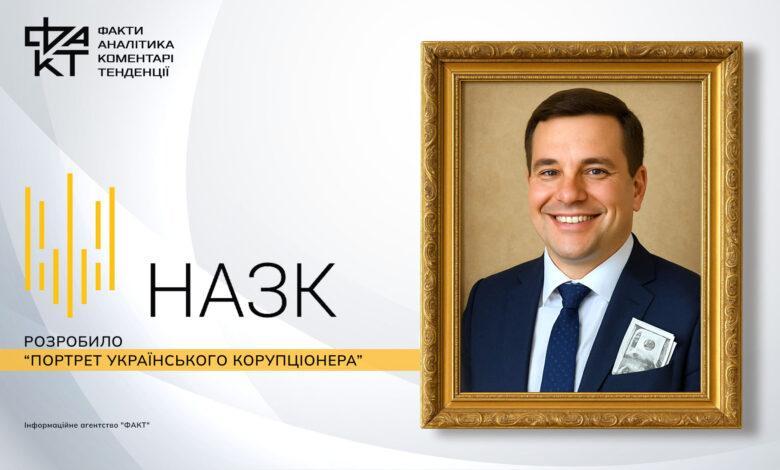
In Ukraine, for more than thirty years, there has been a “powerful” fight against corruption, which continues to include elements of farce and decorative pathos. During the entire time of this endless epic, the state managed to create anti-corruption committees, agencies, bureaus, courts, commissions, councils and working groups. However, all this resembles a hyperactive fish that beats its tail in a puddle – there is noise, there is a lot of water, but there is zero forward movement and results. At the same time, the war only added new opportunities: now you can steal under the shouts of “everything for the front!”, and whoever tries to check, “he works for the enemy.” Instead of a decrease in the amount of corruption, we see its steady growth, and instead of prosecution, we see press conferences, high-profile presentations and reports. The apogee of this was the “portrait of a Ukrainian corrupt official” developed by the NAZK.
The results of the analysis of judicial practice of prosecuting corrupt officials
On May 20, 2025, the National Agency for the Prevention of Corruption (NACP) presented a report based on the results of the analysis of the judicial practice of prosecuting corruption and corruption-related criminal offenses. The document was prepared in cooperation with the Center for Political and Legal Reforms with the support of the EU Anti-Corruption Initiative (EUACI) for the implementation of the State Anti-Corruption Program for 2023-2025.
For the first time, NAZK collected statistics, consolidated court practice, typical qualification errors, common violations of the process and even analyzed the grounds for confiscation and selected wording in the texts of judgments. But the main thing is not in the structure of the report, but in how deeply it demonstrates the systematic and multi-year inability to bring criminal proceedings to the real responsibility of criminals. And how the anti-corruption system sees the threat, but does not neutralize it.
According to Volodymyr Kharchenko, the head of the Department of Summarizing Data on Corruption and Combating It at the Department of Anti-Corruption Policy of the NAKC, in 2023, 10,887 corruption and corruption-related criminal offenses were registered in Ukraine. In 2024, there were even more of them — 11,163. At the same time, only 40% of them go to court. Thus, by the end of 2024, 4,442 criminal proceedings were brought to court, other cases were suspended, dissolved in lengthy processes or were closed.
At the same time, the analysis showed a number of problems that testify to the technical defects of the system, and also demonstrate its deep chronic paralysis. In some criminal proceedings, especially under the articles on abuse of power, 8-10 years passed from the moment the offense was committed to the sentencing. On average, this term is 7 years. In the proceedings that were closed due to the expiration of the statute of limitations, the terms reached 15-17 years. The average time until such cases are closed is 12 years. These eloquent figures reveal the operation of a model in which the formal opening of criminal proceedings is presented as a great achievement in itself, while bringing it to a court verdict is the exception. And it is thanks to this exceptional status of the sentence that the corrupt person in Ukraine is not afraid of the investigation, he has time and a system that guarantees him this time.
According to the analysis, the nature of the cases has not changed over the years: most of the criminal proceedings were instituted under articles 191 (appropriation or waste of other people’s property), 364 (abuse of power or official position), 369 (offer, promise or provision of an unlawful benefit), 368 (receiving a bribe). The total number of crimes under these four articles is 9,795, or 90% of all cases. At the same time, the least number of offenses under articles 210 (violation of the legislation on the budget system) — 12 cases, 368-4 (illegal benefit for influence) — 10, 262 (theft of weapons) — 4, 308, 320 — one case each. According to articles 312 and 313, in 2023, corruption crimes were not recorded at all.
It should be noted that 3,188 persons were notified of suspicion. The lion’s share of these suspicions is concentrated in five articles:
– Art. 369 — 1,651 persons,
– Art. 191 — 464 persons,
– Art. 368 — 414 people,
– Art. 369-2 — 281 persons,
– Art. 364 — 205 people.
These five articles cover 94.6% of all suspects. For the rest of the articles, there are isolated cases or a complete absence of service of suspicions.
It is noteworthy that according to the materials of 4,290 proceedings against 2,471 persons, the materials were submitted to the court. Out of them, 4,281 proceedings included an indictment, and seven included a request for release from liability. Most of all – according to Art. 191 (1648 cases), followed by 369 (1416), 364 (634), 368 (237). And although Article 364 is the second largest number of recorded crimes, only 21.3% of the proceedings — 634 out of 2,983 — reached the court.
The most typical reason for closing criminal proceedings was the expiration of the statute of limitations. For example, according to Art. 366-2, 6 verdicts were canceled and the proceedings were closed due to the expiry of the time limits. At the same time, the courts do not determine the degree of gravity of the crime (which depends on the statute of limitations), do not motivate its course or suspension, and do not fix the end date of this period.
“Portrait of a corrupt official” from NAZK
While society expects fair accountability, court verdicts and the dismantling of corruption schemes, the National Agency for the Prevention of Corruption has decided to take a different path — a creative one. NAZK did not present a new anti-corruption strategy, or a mechanism for bringing top officials to justice, but made an interesting “portrait of a corrupt official”. Statistically verified, psychotyped and as safe as possible for those who are not affected by it in any way.
According to Volodymyr Kharchenko, the head of the department for summarizing data on corruption and countering it, only 16% of those convicted of corruption crimes are civil servants. That is, it turns out that the rest of the corrupt are ordinary citizens who do not hold any positions, are not authorized persons, but for certain reasons decided to act “out of turn” – through a bribe, promise or other form of encouragement.
In addition, according to the “portrait”, most of those convicted of corruption are citizens of Ukraine aged 30 to 50. That is, people of working age, but without a serious administrative resource.
As for the level of education, the NAZK is particularly insistent here: among all those convicted of corruption, only 29% have a higher education. And among those whom the court found guilty under Art. 369 of the Criminal Code — “offer or promise of undue benefit to an official” — only 17% have diplomas. So, as follows from the logic of the “portrait”, bribes in Ukraine are received and given by uneducated middle-aged people who are not officials. And if there are, then working in the civil service, it turns out that they do not have a higher education.
So, according to the “portrait” from the NAKC, the main problem of anti-corruption policy is not the officials who abuse their power, not the deputies who push the schemes through voting, not the judges who release the suspects “according to the circumstances”, but ordinary ignorant people. Those who do not reach the civil service and are unlikely to ever get into the register of e-declarations. In other words, NAZK in its “portrait” formed the image of corruption without power. And most importantly, without the responsibility of the system. Because when the culprit is only the one who offers, and not the one who takes, we have a situation where the shadow falls only in one direction.
This portrait does not look like the result of analysis, but like an attempt to separate corruption from the state. It seems that the system is useless here, bribes are offered exclusively by outsiders not connected to the authorities. But any bribe is always a two-sided action. An offer without consent is worthless. And according to logic, if the state so actively catches “givers”, but does not catch “receivers”, it means that it is catching the wrong people there.
The paradox in the numbers looks even deeper if we remember that 80% of verdicts in cases that have entered into force refer to Art. 369 of the Criminal Code, i.e. the offer of a bribe, not its receipt. The real recipient is very often simply not in the case file, or he remained out of the focus of attention.
This approach of the NAKC completely devalues the very idea of the anti-corruption fight, and also shows a deep reluctance to engage in it. After all, if the portrait of an official “corruptor” is not similar to those who have access to the allocation of budgets, manage procurement, influence appointments and supervise law enforcement agencies, then this portrait is not about corruption at all, but about the unprofessionalism and limited judgment of the agency itself.
Therefore, the NAKC report with the “portrait of a corrupt official” is not a tool of struggle, but a demonstration of his true intentions. The body that should fight corruption deliberately chooses another direction: not to identify specific violations, but to create generalized, nameless images that do not entail any consequences. When the body entrusted with the task of identifying, fixing and initiating responsibility, instead of real cases, presents, to put it mildly, a strange socio-psychological model of a “typical offender”, this is not informing society, but changing reality and fixing one’s own helplessness.
This “portrait” was not the result of a serious study, but a way of removing responsibility from officials, turning the eye aside – to age, education, gender, environment. At the same time, the NAZK report indicates that corruption and anti-corruption simulation continue to exist in parallel in Ukraine. As a result, NAZK sees, the prosecutor’s office thinks, the courts doubt, and the corruption system continues to flourish and become even more arrogant.