“The Ukraine that used to be will no longer exist”: a candid conversation with Yuriy Lutsenko about war, mobilization, corruption, and the future of the country. Part 2.

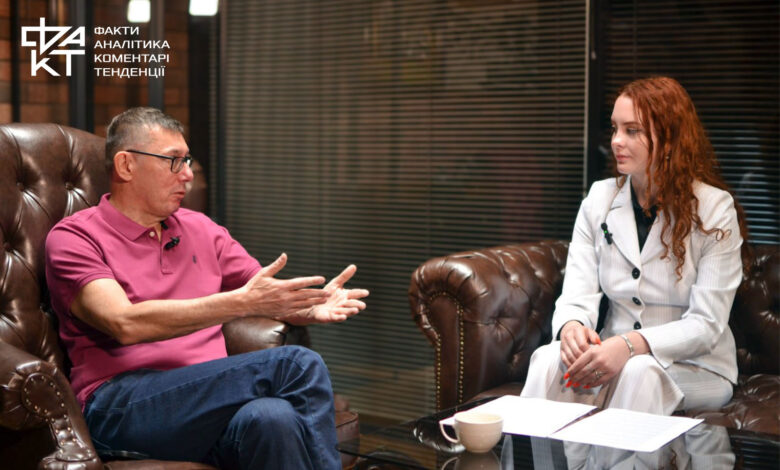
In the first part of an exclusive interview for IA “FACT”, Yuriy Lutsenko told about how long the war will last, what factors can bring its end closer. He assessed the methods of modern mobilization, told how it should have been conducted, and commented on the participation of the police in it. Continuing the conversation, the politician frankly talks about the reasons for the growth of corruption in Ukraine, ways to overcome it, as well as what the country will be like after the war and what to do to preserve a chance for the future.
Many anti-corruption bodies have been created in Ukraine, including NABU, SAPO, NACP, VAKS, and other institutions. How would you comment on the paradox: there are more bodies, there is supposedly more control, but the level of corruption has not decreased, but on the contrary, it has increased many times during the war? What needs to be done to overcome corruption in the state?
In America, there are even more anti-corruption bodies, but the question is not in their number. In world practice, two main concepts are distinguished in the fight against corruption: repressive and preventive. The repressive approach emphasizes punishment for committed crimes, it makes corruption as unprofitable and risky as possible. At the same time, the preventive concept is focused on eradicating the causes of corruption, and not just combating its consequences. The modern “Western” approach consists in the synthesis of both concepts. In Ukraine, there is a whole system in place, where the NACP is responsible for prevention, and the NABU is responsible for criminal investigation.
I was the Minister of Internal Affairs and the Prosecutor General, so I can evaluate both concepts. The Prosecutor General’s Office of Ukraine registers approximately two million criminal proceedings per year, of which about one and a half million are in the Ministry of Internal Affairs. In this flow, it is practically impossible to investigate major corruption cases, even with high-ranking figures. Hundreds of cases are received every day, including dozens of high-profile ones.
So you sit at the table and think: what to choose? To prosecute a high-ranking official or to look for the person who dismembered a child and scattered it in garbage cans, or the gang that rapes children, or when they still file cases about drug trafficking worth two tons per month. What to focus on? I personally believe that the investigative powers should intersect. For example, not one agency, but two should fight corruption.
However, we followed the Western concept, when each agency has only its own investigative powers. The SBU deals with its own area, for example, state security, terrorism. And the NABU only with corruption of high-ranking officials. And no one else can go there. All corruption crimes — from the mayor to the president — are under the jurisdiction of the NABU. The president, of course, has immunity until the end of his term.
And even if the SBU or the police investigate the mayor’s crimes, they are obliged to transfer the materials to the NABU. We followed this concept, so what interests people the most is the NABU, where detectives work. It used to be called an “operator and investigator.” Now it’s one person: an operative who lies in ambush, and an investigator who draws up documents. However, each such detective must have a prosecutor — a person who provides procedural guidance. Without this prosecutor, the case cannot go to court.
That’s why there is the NABU and they have their own separate prosecutor’s office — the Specialized Anti-Corruption Prosecutor’s Office, SAPO. That is, it’s not just NABU, but NABU plus SAPO. They cannot work separately. These are two arms, two halves of one mechanism. Just like the SBU and the Prosecutor General’s Office, the Ministry of Internal Affairs / National Police and the Prosecutor General’s Office, the BEB and the Prosecutor General’s Office. And here – the NABU and the SAPO.
But this is a completely independent body, about whose work even the Prosecutor General has no right to know. The specificity of the law is such that it does not know what interests society the most: the progress of cases against high-ranking officials. This is only in our country, and it is very strange. When I came to any city, they would say to me: “You are the Prosecutor General, why is our mayor not in prison?” I would answer: “This is not my jurisdiction.” They say: “Well, how is this? You are the general.” And I say: “That’s my name, but they took it away from me.” It is very difficult to explain this to our people, but it is true. And at one time I had conflicts with the NABU precisely because of this.
Now, after the change of leadership of the NABU and the SAPO, from my point of view, they have finally become effective. How much has passed? More than ten years since its creation. And now they are working as we expected ten years ago. That is, now their work is already noticeable. Of course, you can hunt for category “A” officials in the regions, but you can still start from the head, because the fish rots from there.
Therefore, in principle, they immediately took up the state mafia. And they took up the matter professionally: for half a year they documented all the necessary connections, then they began to gradually detain the executors, and now they are already reaching the organizers of this scheme.
When I worked in the Prosecutor General’s Office, together with the Security Service of Ukraine, we detained from 5 to 9 bribe takers with amounts over 10 thousand dollars every day, we didn’t even count smaller amounts. Every day. That is, 5 by 300 is about one and a half thousand bribe takers per year. However, the courts sentenced only a few. And I understood: describing the problem is one thing, but the source of the problem is completely different. This is the first story.
The second story: speedy trials are only temporary and illegal. Even when Yanukovych imprisoned me, and I was taken to court in a cage every day, the trial still lasted half a year. And it was a temporary trial, because I was denied all the defense witnesses. There were 186 prosecution witnesses, although 185 of them testified in my favor. That is, it was a temporary trial, but even it lasted half a year.
If people expect that a bribe taker was detained today, and imprisoned a month later, it means that we are no longer talking about a state governed by the rule of law. Then this is already the “office of simple decisions” named after Zelensky. The trial should last at least a year — even in simple cases. And in such major cases as you ask about — regarding high-level corruption — it is at least years of a thorough trial with an objective, fair and legal decision, taking into account all the circumstances.
Have we had such cases? Not many. For example, I believe that I achieved something when I sentenced President Yanukovych to 13 years. Yes, he fled. At the time of the sentence, he was no longer in the country, but he was tried for more than two years. Because they followed every letter of the Criminal Procedure Code. Every one. And they received a fair sentence that no one could overturn. That is, if he suddenly returns to the territory of Ukraine, the sentence will immediately come into force – and it is 13 years in prison.
What should be done to overcome corruption in the state? Look, I am confessing a very simple thing here. What should be done so that there are no puddles around the fountain? There are two options: either endlessly wipe away puddles, or block the fountain. Therefore, first of all, we need to block the main source of corruption. Let’s think about where it comes from. You, of course, will say: bad ministers, heads of regional administrations, mayors. But I ask: what are they stealing from? State property.
Ukraine is the second largest state-owned economy after China. We have the largest number of state-owned enterprises in the world after China. My favorite example is the state-owned enterprise “Horses of Ukraine”. Three horses with ribs on the outside and 20 thousand hectares of land. The director, of course, makes agreements with businessmen: he sows these 20 thousand hectares, harvests the crop, sells it for cash and puts the money in his pocket. Who? For himself, of course. And also for the person who appointed him. And who appointed him? The party boss.
Why does this happen? Because the majority party member who came to parliament sooner or later becomes necessary for the prime minister to vote on the state budget. First, the coalition has 60%, then — 51%, then — 50.3%. And here every vote is needed. The deputy says: “I want to appoint the director of “Horses of Ukraine””. At the same time, he receives his bribe from him, sows the district – and there are already two of them, then four, then ten. then twenty. So, the existence of a huge state sector is the main source of corruption in Ukraine.
Look at all the cases. Have you ever heard of massive theft at a private enterprise and being given 10 years for it? This happens, but rarely. And where do they steal constantly? Energoatom, Turboatom, Koni Ukrainy, Naftogaz. That is, first we need to answer the question: why do we have so many state-owned enterprises? Yes, I understand that Turboatom or Khartron do not need to be privatized, because they are strategic enterprises. So does Naftogaz and a number of others. But do you know that among these more than two thousand state-owned enterprises: a third are unprofitable for the state, a third do not work at all and only a third actually pay anything into the state budget? So, maybe those that don’t work should simply be closed or privatized?
Let’s put them up for one hryvnia – with the condition that in three years the new owner will restore, say, a certain number of jobs. They will become private, start producing something and cease to be a source of theft. And the one-third that is unprofitable can be put up for auction and done the same way, leaving the state only what the state really cannot function without. “Golden eggs” – such as “Turboatom”, for example, or “Naftogaz”, or “Transgaz”. And then you will have to control a much smaller number of objects, and the source of corruption for everyone who wants to put their own person there and steal from it will become almost impossible. It is much harder to steal from a private owner.
I even went so far as to believe that we need to privatize forests. I am absolutely serious. In any private forest that has been leased for 49 years, no one cuts down a tree just like that, because for that, at least, they will get a kick in the ass. And in a state forest, you can cut down everything and say that “that’s how it was”. Therefore, when we talk about the fight against corruption, we must first make economic decisions that will make it impossible or almost impossible to easily steal state property. This is the main “fountain of corruption”: the state sector of the economy.
I understand that most people say: “You can say whatever you want, but explain why no one sat down.” Every year, tens of thousands of people are convicted in our country, including for economic crimes. Not top officials, of course, but precisely in order for cases to appear against them, the NABU was created.
Many people criticized me at one time because I was a co-author of this law (the Law of Ukraine “On the National Anti-Corruption Bureau of Ukraine” – ed.). Yes, I was criticized when I took the position of Prosecutor General for the fact that NABU is not working, and I still support it, although it was not my area of investigation. However, today they have finally started to produce results, that is, after ten years the situation is starting to change.
How would you comment on the high-profile corruption scandal involving Timur Mindich and other defendants? Is this really a chance to show the inevitability of punishment, or will society once again see the familiar scenario with bail, delaying the case, and the gradual disappearance of responsibility?
When we hear about Mindich’s tapes, we understand — probably everyone understands — that ministers cannot just come to the apartments of an Israeli citizen Mindich. Imagine: ministers just started going around and asking where else they can steal and who they can take what to. A minister who is appointed to Bankova Street cannot just walk around and say: “Let’s steal a hundred million together.” It is clear that this is all a coordinated system. That is, there is an organized criminal group, it has a structure. There are executors on almost all financial flows of the country, who installed a “barrier”: 10% kickback — and then you receive funds for the work done. In all areas: grain export, mineral fertilizers, energy, drones, fortifications — anything you want.
Then above them are ministers who come to apartments with a golden toilet and report to the “watcher”. What is a “watcher”? This is a person authorized by the leader of an organized criminal group. Until the last moment, it was unclear why the suspects were the ministers, that is, the executors, and the “watcher”, who, of course, was given a “green light” to travel to Israel a few hours before the suspicions were announced.
However, it was not clear why the ministers were going to a private individual. After Mr. Yermak, who actually approved, selected, and actually appointed ministers, was suspected, it became clear who was in charge of these processes.
Recently, the situation with Andriy Yermak has received great resonance? How would you comment on it? Will it develop according to the already familiar scenario – serving suspicion, bail, delaying the case, political cover, and going abroad?
The most famous American mafioso went to prison for not paying a small amount of taxes by American standards. Not for banditry, not for racketeering, not for grievous bodily harm, as we say, but specifically for failure to pay taxes. And he got more than a hundred years there.
Yermak is our Al Capone. There are a lot of claims against him that could form the basis of criminal prosecution. However, the easiest thing to look at is that he invested the stolen money with Mindich in a house. That’s what NABU is doing. Will it prove it? I think it will prove it. Will the court accept this evidence? I won’t get ahead of myself, because it’s not entirely correct to comment on it.
But looking at the practice of the High Anti-Corruption Court, this is also a separate story. In addition to NABU and SAPO, we also have a separate High Anti-Corruption Court. And, pay attention, it is located only in Kyiv. That is, it’s not like any mayor of a city who has to be tried in the court of the same city, where the judges have already received three apartments from this mayor. I’ve encountered this more than once or twice.
The High Anti-Corruption Court considers cases regardless of where the official lives – in Lviv, Kharkiv, Poltava or Frankivsk. It comes to Kyiv. There are a small number of judges there, they are selected separately, and their sentences are quite harsh. So let’s look at the course of this process. But at this point it looks like Yermak has serious challenges ahead.
And society, of course, will look at this as a test for NABU — its professionalism and efficiency. I mean NABU, SAPO and VAKS together. However, there is one circumstance here: Yermak has very smart lawyers. So I don’t want to comment in advance, but he still got a blow.
The former heads of the President’s Office Andriy Bohdan, Andriy Yermak, former deputies of the President’s Office Kyrylo Tymoshenko, Andriy Smirnov and Oleksiy Dniprov, as well as the former non-staff advisor to the President’s Office Oleksiy Arestovych are people from the president’s inner circle who were once his friends. At different times, they had significant influence on him and direct access to state decision-making. Why, in your opinion, do they first find themselves at the peak of their influence, and then leave either with scandals or after high-profile journalistic investigations and reports of suspicions of corruption?
Zelensky is a super-specialist in the conversational genre. And there is nothing wrong with that: everyone should be a specialist in some genre, but he knew absolutely nothing about the system of public administration and dragged various junk into the vacuum of power. He selected people simply on the principle of personal attitude towards them.
Here is Mendel – a vivid example. They announced a competition for the position of press secretary, they chose a girl. She first wrote a laudatory book, and then poured three buckets of dirt on the president of Ukraine. Why did this happen? Because of absolute populism and unprofessionalism. Compare her with any press secretary of previous presidents – from Kuchma to Poroshenko. They were all at a completely different level, so it was impossible to even imagine such behavior.
The situation is similar with ministers. Do you even know the names of all the current ministers? They were known in society before, but now they are not. For example, Arsen Avakov. This is happening now because nothing depends on the current ministers. If Avakov was there before, then everyone understood: the decision is his, even more than he was supposed to decide. And today, no matter who is the Minister of Internal Affairs, Minister of Economy or some other minister, everything is still decided on Bankova Street.
The tragedy of Ukraine is not that it elected Zelensky, that is half the trouble, because not all presidents are super professionals. The question is another: is he ready to surround himself with super professionals who will compensate for his weaknesses. The problem is that Zelensky surrounded himself with absolute ignoramuses in everything, but the real trouble began when he was also given a monomajority of the same deputies. І в цей момент настала велика біда: фактично моновлада однієї непрофесійної особи.
Навіть у Януковича була коаліція — зокрема з комуністами. Йому це дорого коштувало, але він все одно мусив з ними домовлятися. Дорого — у прямому сенсі цього слова. От Петро Симоненко поміняв «Капітал» Маркса на капітал Ахметова, це дорого коштувало, але все одно це була коаліція. А тут — монобільшість, якій дали конверт і список, за що і як голосувати. Але й конверт добували бандитським шляхом, і список формували невігласи. Тому в нас відбуваються процеси, по-перше, повного розвалу законодавчого поля, а по-друге — маса кримінальних справ проти тих, хто збирав кошти на ці конверти. І, само собою, себе не забував. Ось і вся відповідь.
Тобто український народ у цьому випадку вкотре наступив на граблі. І єдине, чого я хотів би, — щоб цей урок був засвоєний. Я взагалі категорично проти критики наших виборців за те, що вони, мовляв, «не так голосують». Постійно тицяти людям дулі — це нічим добрим не закінчується, бо людина просто відвернеться. У цьому випадку це страшний урок, який дуже дорого коштував нам, як з Януковичем, але зараз наслідки набагато важче.
Однак урок такий: ні авторитарного кримінального президента, ні авторитарного популістського президента обирати не можна. Тоді буде менше і корупції, і руйнування державних механізмів. Скажу річ, яка, можливо, комусь не дуже сподобається. Але, враховуючи, що я вже відставний політик, можу сказати: політика — це теж професія. Не можна обирати в політику людей лише тому, що вони вам подобаються у спорті, на естраді, в інженерії чи навіть на посаді мера.
Політик має роками вчити свою професію і знати український та світовий досвід. Постійно спілкуватися з людьми й жити серед них. Тільки тоді можна стати політиком. А просто той, хто краще заспівав на «Євробаченні» чи краще виступив на сцені, — це ще не політик. Ми ж знаємо багато випадків: спортсмени, співаки, ректори. От Кличко, наприклад. «Давайте оберемо його мером» — прекрасне рішення українського народу, але мера треба не знати щодня.
Я ніколи не забуду, коли вперше приїхав до Польщі як міністр, це був 2005 рік. Питаю там: «Хто у вас міністр внутрішніх справ?». Мені відповіли: «Я не знаю і знати не хочу». І я подумав: яка це класна модель. Польський мислитель Станіслав Єжи Лец казав: «Найкращий керівник — той, чий портрет ви побачите через сто років після його смерті на марці, а не щодня на плакатах чи телебаченні».
Президент, звичайно, має бути відомим. Міністр, напевно, теж має бути достатньо відомим, але головне — не відомість, а фаховість. І ще одна дуже важлива риса — співчуття до людей. Колись батько мене вчив, що таке керівна посада. Є три головні правила. Перше: жодне місце керівника не варте того, щоб не подати у відставку, якщо йдеться про принцип. Друге: політик або керівник без співчуття до людей — приречений. І третє: роби те, що можеш, з тим, що маєш, там, де ти є, але на повну силу. В принципі, приблизно такими є мої критерії для політиків і керівників.
Якою буде країна після війни, якщо частина людей загинула, частина виїхала, а економіка роками працює в режимі виживання при тотальній корупції? Що має робити влада вже зараз? Ви підтримуєте залучення трудових мігрантів з «ризикових країн»?
Тієї України, яка була раніше, вже немає і не буде. Вона може бути або гіршою, або кращою. Тому треба чесно подивитися в очі й сказати: повернення ні в 2005-й, ні в 2014-й, ні в 2019-й в навіть в 2022-й вже не буде.
Ми маємо всього близько 20 мільйонів населення. Надія на те, що повернуться мільйони мігрантів, тане з кожним місяцем, бо їхні діти вже пішли в інститути, люди отримали дозвіл на постійне проживання, і відбувається багато інших процесів. Більше того, військові, які повернуться, частково поїдуть до своїх сімей туди.
Питання номер один — це кількість населення. Чи зможуть 20 мільйонів прогодувати й утримати Україну? Зверніть увагу: з 20 мільйонів населення — 12 мільйонів пенсіонерів і 5 мільйонів дітей. Отже, працездатних залишається в кращому разі 4–5 мільйонів, з них більшість – це ФОПи. А значить, великі податки сплачує дуже мало людей. І навіть якщо уявити, що в нас запрацює промисловість, це означає, що ми постанемо перед викликом міграції — неукраїнської.
У нас існує не бажання, а саме необхідність залучати мігрантів ззовні. Питання в тому, чи держава буде над цим працювати, чи просто збільшить квоту. Сьогодні квота — 5 тисяч людей, це ні про що. Очевидно, вона буде більшою. Ви ж у Харкові пам’ятаєте своїх в’єтнамців на Барабашова? Мені здається, що суспільство, а отже й держава, мають визначитися, яких мігрантів ми хотіли б бачити, хто легше інтегрується в українське життя.
Зарплата в Україні є мрією для багатьох народів. Насамперед, наприклад, Бангладеш. Це одна з найбідніших і найгустіше населених азійських мусульманських країн. А є інша країна — наприклад, Індія. Це дуже різні культури. Канада, наприклад, зробила ставку на індусів з вищою освітою або повною середньою освітою за певними спеціальностями.
До чого я веду? Держава й суспільство мають визначитися, кого ми хотіли б прийняти на робочі місця, які не можемо заповнити самостійно. Яку цивілізацію ми хотіли б інтегрувати? І це серйозна дискусія. Я тут не хочу нав’язувати свою думку, але ще раз скажу: після Другої світової війни німці запросили три мільйони турків — і вони всі інтегрувалися. Французи запросили алжирців після своєї війни, вони теж всі інтегрувалися. Але є приклади, коли певні народи (не буду називати які) погано інтегруються. І тому це серйозний виклик.
Наступне питання: хто взагалі буде працюватиме з ветеранами? Ми розуміємо, що вони не просто вміють стріляти. Вони вже перейшли бар’єр, коли стріляти було важко. Ми розуміємо, що щонайменше 100 тисяч людей не просто можуть стріляти з автомата, вони ще й володіють дронами. Тобто питання роботи з ветеранами, зняття з них стресу і психологічної напруги, надання медичної допомоги, працевлаштування — мають бути питанням номер один у країні.
Нинішнє Міністерство у справах ветеранів явно не тягне цю роботу і навіть на неї не будує планів. А ви розумієте: хлопець, який прийшов з окопу, звик до зарплати в 100 тисяч, повертається в село. Місяць святкує, відпочиває, але потім раптом бачить, що сусід-ухілянт раптом розбагатів. Якою буде його реакція? Дуже прогнозованою. Треба буде думати, як цим людям дати справедливість і роботу. А з іншого боку — як допомогти їм контролювати себе.
Ще один виклик – економіка. Сьогодні Україна має найнижчий рейтинг в Європі. При цьому половина нашого держбюджету складається з європейської допомоги. Проте питання в іншому. Закінчилася війна і європейці, якщо й будуть давати гроші, то лише на фінансування армії, яка стала вже європейською, а не тільки українською. Але чи будуть вони давати гроші на пенсіонерів, соціалку, на охорону здоров’я — як сьогодні? Скоріш за все – ні.
Тоді на чому житиме Україна? Сьогодні половина нашого експорту — це АПК. І не тому, що ми така «житниця», а тому, що в нас майже немає іншого експорту. Ввесь експорт України менший, ніж перша стаття польського експорту. В нас всього близько 40 мільярдів доларів експорту, в Польщі тільки електромобілі та запчастини до них дають приблизно стільки ж. 10% польського експорту — це весь український експорт.
Другою великою статтею в нас є металургія, а далі йде по 3–4% різних напрямків. При цьому промислова продукція скоротилася до 5%, і це переважно ВПК. Питання: чи можна буде запустити старі заводи? Ні, бо вони вже неконкурентноспроможні. А чи хтось думає про нову індустрію? Це треба робити не після закінчення війни, а вже зараз. Так, це великі ризики. Розмови про те, що нас витягне ВПК, я підтримую: АПК, ВПК — дрони, ракети тощо. Втім, ІТ дає дуже мало, і штучний інтелект докорінно змінює цю галузь.
Ми маємо знайти нову високотехнологічну галузь. Наприклад, Китай піднімався на титановому порошку, не маючи титанової сировини. Україна має найбільші в Європі запаси титанової сировини, які оцінюються приблизно у 8,4–94 млн тонн залежно від джерела. Знаєте, що всі 3D-принтери потребують титану? Ми маємо свою сировину і нічого не робимо. Це мільярдний експорт і гарантовані ринки. Хтось мав би про це сьогодні думати? Я не кажу вже вкладати кошти, я кажу хоча б думати!
Україна взагалі вважалася дуже перспективною державою. Вважалася… Бо через виступ капітана КВК в Білому домі ми віддали всю сировину задарма. Згідно угоди зі Сполученими Штатами вся сировина України належить спільному фонду, який використовуватиме її на свій розсуд. І в кращому випадку лише через десять років ми зможемо отримувати звідти якийсь прибуток. Це і є результат тієї дуже популярної зустрічі пана Зеленського з паном Трампом, якій так аплодували необізнані українські громадяни. Це сухий залишок, саме сухий.
Ще один виклик — що робити, щоб не почалася нова війна. Нам вкрай необхідне зміцнення Збройних сил. І знову ж таки — за що? І з кого? Дуже багато військовослужбовців хочуть додому, але потім повернуться, для них це зрозуміла робота. Якщо вона буде нормально оплачувана, вони залишаться в армії. І це якраз те, що Європейський Союз готовий профінансувати. Питання в тому, чи готовий він профінансувати розвиток технічної української армії після закінчення війни.
Вони кажуть: так. Україні вже роки три пропонують стати частиною Європейського оборонного союзу, бо НАТО стало не дуже гарантованим, скажімо так. Тому країни, які перебувають в «другому окопі» (ми в першому) за нами — від Норвегії до Польщі й Румунії, — в принципі, готові створювати Європейський оборонний союз. Другий окоп завжди розуміє, що відбувається. Іспанія, наприклад, розуміє гірше. А Польща, Балтія — дуже добре. Вони кажуть: нехай Україна вступає в оборонний союз. І нарешті наш президент нарешті каже: так, ми готові.
Водночас відбувається інший процес — членство в Європейському Союзі. Це, напевно, головна надія України. Єдиним позитивним наслідком цієї війни може бути тільки членство України в ЄС. Але європейці розривають ці дві цілі. Вони кажуть: давайте ви будете членом оборонного Європейського Союзу, але членом Європейського Союзу, тобто економічного союзу, — трохи пізніше. І тут дуже важливо, щоб наполегливо, без дипломатичного хамства ми з’єднали ці два процеси. Ми готові й далі бути бронежилетом Європи, але для того, щоб захищати спільний дім. Чи можна це зробити завтра? Ні. Але працювати треба вже сьогодні.
З моєї точки зору, коли дійде справа до виборів, це буде ключовим питанням: хто буде на чолі держави? Президентом має стати людина, яка знає, як не допустити наступної війни і розуміє потреби ЗСУ. Не через «велике будівництво» й асфальт, а через справжнє зміцнення Збройних сил. І друге — це людина, яка зможе завести Україну в Європейський Союз. Це два ключові питання для посади президента. Питання — що буде з цінами на газ, освітою, медициною, які будуть пенсії — є дуже важливими, але це не функція президента, це функція уряду й парламенту. А от ці два питання — ключ до обрання наступного президента. І не питайте мене про прізвища. Нехай кожен сам бере будь-яке прізвище й приміряє його до цих двох задач: чи зможе він їх вирішити, і тоді раціонально проголосує.